Indie Interviews
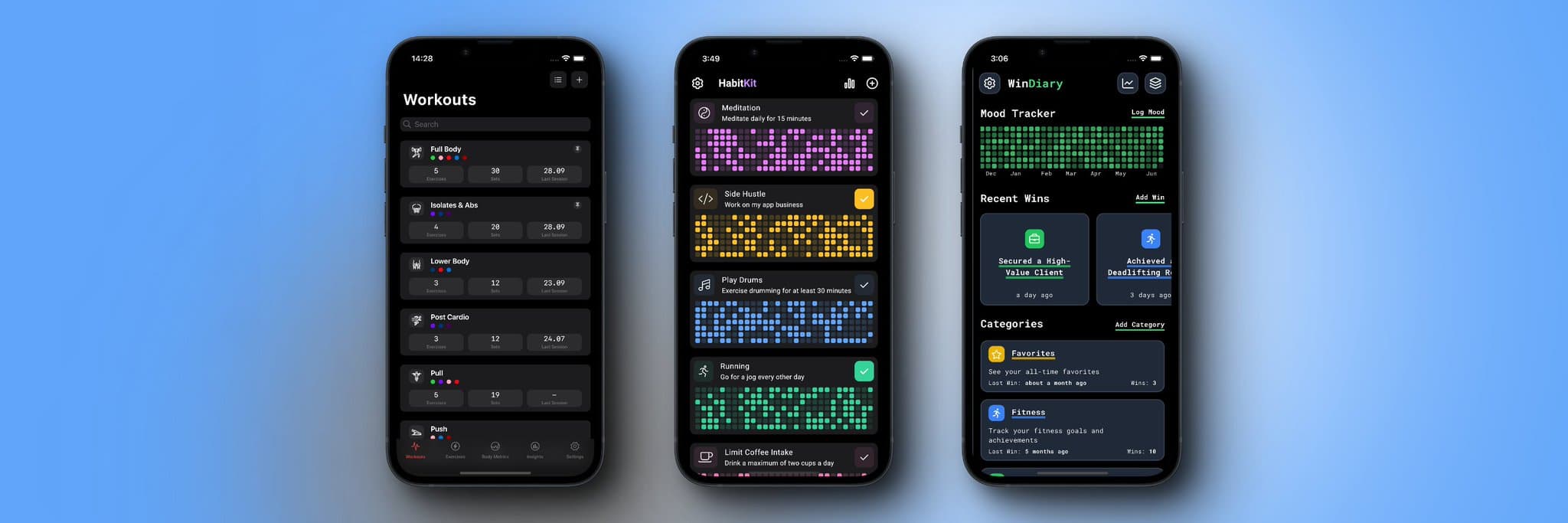

Today we're happy to introduce you Sebastian, a verty talented developer from Germany. You may already know him from his popular app HabitKit and Liftbear. Sebastian is very active building in public, and shares regularly about his learning about his experience building apps and marketing.
Understand the diverse roles you juggle as an indie developer, from marketing and planning to design and social media
Can you tell us more about yourself and what led you to become an indie maker
I'm Sebastian, a 30-year-old from Germany. After earning my computer science degree from university, I worked as a Software Engineer for three years. However, ever since I stumbled upon the Indie Hackers podcast a few years back, I've been dreaming of starting my own company to craft and release personal apps. So, in 2022, I took a leap of faith, left my job for a year, and embarked on developing those apps. After one and a half years of indie hacking, I've managed to produce three apps that are now available on both the App Store and Google Play.

How did you come up with the idea? How do you generate ideas for your apps or projects, and how do you identify the problems or needs your app can address?
The inspiration for all my apps springs from personal needs I encounter in my everyday life. Liftbear, my first app, was born out of my passion for weightlifting and my struggle to find an existing tracking app that could satisfy all my needs. Frustrated by this gap, I decided to create a solution myself.
Meanwhile, my second app, HabitKit, started as a side project. I was seeking a habit tracking app that could visualize all my habits in one place using a GitHub-like consistency grid. Finding none that matched this description, I took it upon myself to create one.
Finally, my third and most recent app was born out of a recurring personal struggle. I often find myself forgetting about my past victories, especially when I'm down in the dumps. So, I wanted to create an app that lets me quickly look back at my last personal achievement. This way, I'm always reminded of my progress, even when things aren't going so well.
How does your day-to-day app development workflow look like?
Currently, my indie hacking venture is a side hustle, which usually has me starting in the afternoon. The first thing on my agenda is to check my emails for any support requests that need my attention.
Next comes the part I truly relish. Being entirely in charge of my creative process and products gives me the freedom to spontaneously choose my tasks for the day. Do I feel like coding a new feature? Fixing some bugs? Crafting a few Twitter posts? The possibilities are endless, and I love that flexibility.
I aim to maintain relatively short development cycles, enabling me to get user feedback quickly. The advantage of being a user of my own products is that I don't generally require external testers or open beta trials. I simply roll out updates directly to production and keep my fingers crossed, hoping for the best.
How do you launch and market your app?
Once I've developed all the essential features for a MVP, I set a launch day to release it on both the App Store and Google Play - Sundays are typically my go-to.
About a couple of weeks before the big day, I start making some noise for the release on Twitter. I share screenshots and designs to gauge public interest, and this often opens up channels for valuable feedback. I usually incorporate this feedback into the final app version.
On the day of the launch, I kick things off with a Twitter post, and then trying to stay as active as possible there. I also encourage my friends on the platform to try out the app and leave a review. These reviews are incredibly valueable, as they significantly help boost my app's ranking on both the App Store and Google Play.
Post-launch, the majority of my marketing efforts continue on Twitter. I keep my audience engaged by posting snapshots from the app's active development phase or sharing recent milestones that I've hit.
What are the future plans for your app?
My backlog of potential features for all my apps is quite extensive. I get a lot of feedback from my users, which emphasizes the need to prioritize my next steps. I'm considering undertaking a major Liftbear refactoring, using the insights I've gained from creating my other apps. I also got lots of cool feature ideas for HabitKit and WinDiary. I also have some ideas for new apps as well, but at the moment, I'm content with having three apps on the Stores. My focus now is to focus on their growth before diving into the development of a new app.
Do you have any interesting lessons learned or tips for other indie makers?
I've gained of lot of insights and revalations of the last year while building my indie apps. Here are the most important:
-
✨ Stay small: Embrace the idea of thinking small as a solo developer, focusing on creating a suite of smaller, problem-solving applications instead of aspiring for large-scale SaaS projects. Understand the diverse roles you juggle as an indie developer, from marketing and planning to design and social media, which means your time isn't exclusively dedicated to feature development. Set realistic expectations, acknowledging that building the next Facebook or Google is definitely beyond your reach, and prioritize steady progress.
-
✨ Monetization right from the start: Looking to generate some income with your app or service? It's a smart move to start with a basic Pro plan right from your app's first version. This helps you start earning a bit and paves the way for your business growth. After all, having paying users is the best way to validate your app or concept.
-
✨ Manage expectations: It's crucial to keep your expectations in check and don't hope for revenue and user growth right from the start. This way, you're not down in the dumps if your app doesn't blow up with downloads or if people aren't rushing to your Pro plan. Staying realistic helps keep you pumped and zeroed in on your goals.
Looking back, are there any decisions or actions you regret not taking before or during the development and launch of your apps? Is there anything you would have done differently?
I truly wish I had kept the scope of my first app, Liftbear, much smaller. After its initial launch, I continued to add feature after feature, causing the app to become quite bloated without a clear plan for monetization. Now it's pretty hard to transform the app into something more specific because I don't want to upset existing users.
Are there any other products that you are particularly proud of? Could you share some details about them
The app I'm most proud of is HabitKit, my minimalist habit tracking app that displays your consistency in a graph similar to those found on GitHub. I believe I executed many things correctly with this product. I engaged my Twitter audience with screenshots from the early development stages, incorporating their feedback promptly. I then launched a very basic MVP and waited to see if it would gain any traction. Upon noticing that many people genuinely enjoyed the app, I began to add exciting new features such as a streak counter, notifications, and home screen widgets.
Are there any indie makers or creators whose work you admire and follow closely?
I follow a lot of cool indie makers, especially in the mobile app sections: @davidjoech, @Dima_heyqq & @Matt_heyqq, @metzgereduard and @FlorianMielke, just to name a few. They all build super cool products and I find their content on Twitter really inspiring and motivating.
Could you recommend any specific tools or resources that you believe are helpful for other indie makers, especially those just starting out?
The App Store Optimization (ASO) guides found on the Appfigures website proved incredibly valuable as I started creating my first apps. These guides provide great instructions and show you the process of naming your app and selecting keywords for the App Store, which can be complex for beginners.
In addition to helping with initial setup, these ASO guides also offer insights on how to continually optimize your app's performance in the store. They present useful tips on how to improve visibility, attract more potential users, and ultimately, boost downloads. Understanding and applying these principles can significantly impact your app's success, as the right name and keywords can greatly increase its discoverability among the millions of other apps on the App Store.
Thanks for reading til the end. Hope you enjoy the interview as much as we did. Below are some useful links mentioned throughout the interview
- Sebastian Röhl
- HabitKit
- Liftbear
- Win Diary
- AppFigures
- David Jöch
- Dima Rubano
- Matthias Neumayer
- Eduard Metzger
- Florian Mielke
Indie Interviews by Indie Goodies is all about discovering and showcasing indie makers. We firmly believe that behind every app, there's an inspiring tale of passion, creativity, and perseverance. We're always on the lookout for aspiring indie makers to feature in our series, and if you have any suggestions or recommendations, we'd love to hear from you.
Once again, thank you for joining us on this journey. Your support means the world to us. Until next time, keep supporting indie makers, keep exploring innovative apps, and subscribe to Indie Goodies interviews for more.