Indie Interviews


Can you tell us more about yourself and what led you to become an indie maker
Hey! My name is Krzysztof Zabłocki, I've started programming very early (I was 8th when I wrote my first program) with the goal of making games, and up until my university I was focused on gamedev, creating many 3D game engines and frameworks along with indie games. Then in 2008 iOS came out and I was mesmerized by the possibilities and UX of the platfrom, so I decided to switch to that full-time and I've never regreted it!
When I switched to iOS I started looking at problems the platform had, and over the last decade+ I've created more than 20 open source projects and gave over 50 talks for our community, and even though I was very happy with the success of my projects and my career trajectory (leading NYT for almost 6 years etc) I always had the itch to try doing my own stuff.
I've dabbled with Indie apps while working full-time before, creating apps like Foldify or Storest among a few others. I only decided to go full indie last year in May, I thought about this for long time but was scared of taking a break from full-time work, I finally decided to give Indie life a try because I didn't want to regret never doing it and was planning to start a family soon, so it felt like it was my last chance to take a risk before doing so.
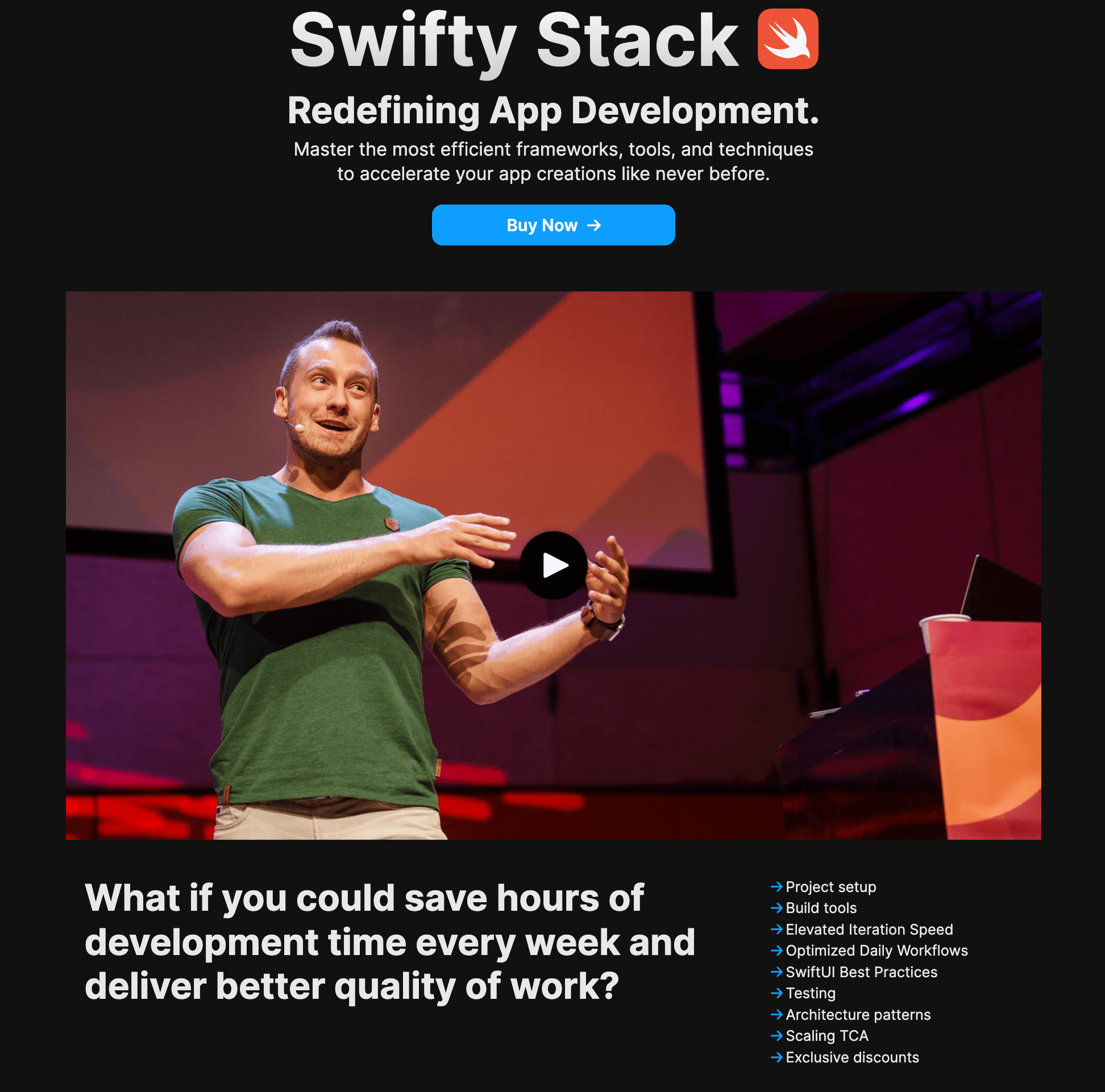
The first indie project I decided to launch is a unique engineering course for Swift engineers called Swifty Stack
How did you come up with the idea? How do you generate ideas for your apps or projects, and how do you identify the problems or needs your app can address?
I've been working as a consultant with lots of companies, focusing on optimizing engineering team efficency through Architecture/Workflow and custom developer tooling and saving businesses anywhere from 50-500k USD per single audit I did. I've noticed that many problems that engineers face on Apple platforms are very similar even across completely different products.
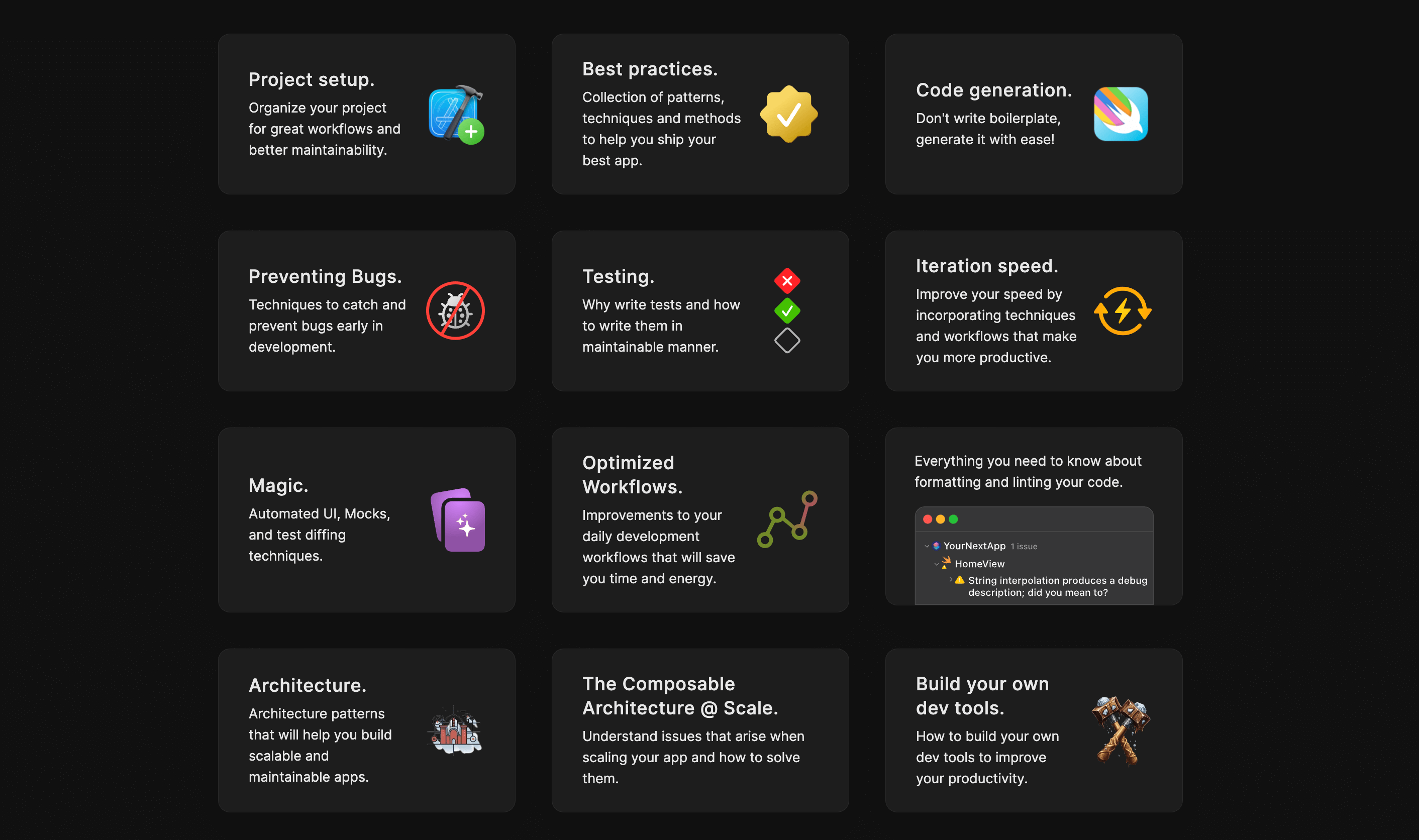
This has led me to realize I can create a course that instead of teaching you a specific framework, can show you how to streamline and improve your output and efficency across all areas of app development, not only saving you hours of work every week but also making your job a lot easier and more enjoyable in the process. The other motivation was to create a great project template that I can use to easily create many indie apps, and the course is bundled with that.
I didn't really expect my first indie project to be a big success, especially an engineering course as it's a niche product but to my surprise it blew up, over 700 engineers took it already and it made me over 100 k USD in revenue.
How is your day-to-day app development workflow look like?
I tested many approaches to efficency over the years, e.g. I used to start my day by doing cardio, but last few months I realized it messes up my day, instead I now start each day by doing 2-3h of Deep Work before training, that sets my day up for success.
When working on my indie apps I use all the tools I've created over the years so I don't waste a lot of time dealing with Apple default toolchain shortcomings, I also do lots of TDD development as that not only makes me faster (once you learn how to properly leverage TDD) but also lowers maintenance cost of my apps in the long run.
When working on the course I was starting each day by designing the chapter I want to talk about, then building slides and video script, only after I had it prepared would I start recording. One thing I found more efficent here was to record all theory and just cut and paste the live coding elements into it, instead of recording slices of the chapters like I did when I started.
How do you launch and market your app?
I was lucky that my apps were all featured by Apple, Foldify was Apple Essential and Best of Year. This is probably due to how I've always choosen which side-projects to work on, more on that in the tips question.
For the course I have a good social proof from building all the tools for the community, so I didn't really advertise it anywhere yet, since although I'm planning now to launch it on Product Hunt and probably Indie Hackers as I just recently finished the curriculum, before folks were getting it in early access while I was adding new chapters every week or so.
What are the future plans for your app?
I will keep updating the course when either myself or the community creates new solutions to common problems, other than that the course is already a beast with over 7h of video and 70+ lessons.
I'm thinking of doing more focused courses for the engineers, e.g. I've recently done TDD workshop for Vinted and was thinking maybe that's going to be my next course for the community.
Do you have any interesting lessons learned or tips for other indie makers?
When choosing a project to work on, especially if you are doing it as a side-project and not your main job (working full time or consulting), I wouldn't set main focus to be making money as there are too many variables not under our control and this can set up our psyche for failure and depression.
Instead I'd recommend focusing on things we have control over:
- • Learn new skills, that way your market value grows and those skills could be useful in future projects
- • The project needs to be something you will feel proud of, at least enough to put it in your portfolio, this pushes me to polish my apps
- • It should push you out of your comfort zone, this builds character and means next problems I'll need to tackle are going to be easier...
The other tip is to take small bets, build MVP and evaluate interest, don't spend a year building a product no one is going to use, try to find the essence of what you want to convey and polish that and show it to people, if the essence doesn't work, any additional features you'll add probably won't make the difference, so better to try another idea.
Looking back, are there any decisions or actions you regret not taking before or during the development and launch of your apps? Is there anything you would have done differently?
I would love to involve more people with my projects, I love working with people and I think it makes the products better, even if you can create whole project by yourself, involving a right partner will make the whole process more enjoyable and the end product better.
Are there any other products that you are particularly proud of? Could you share some details about them
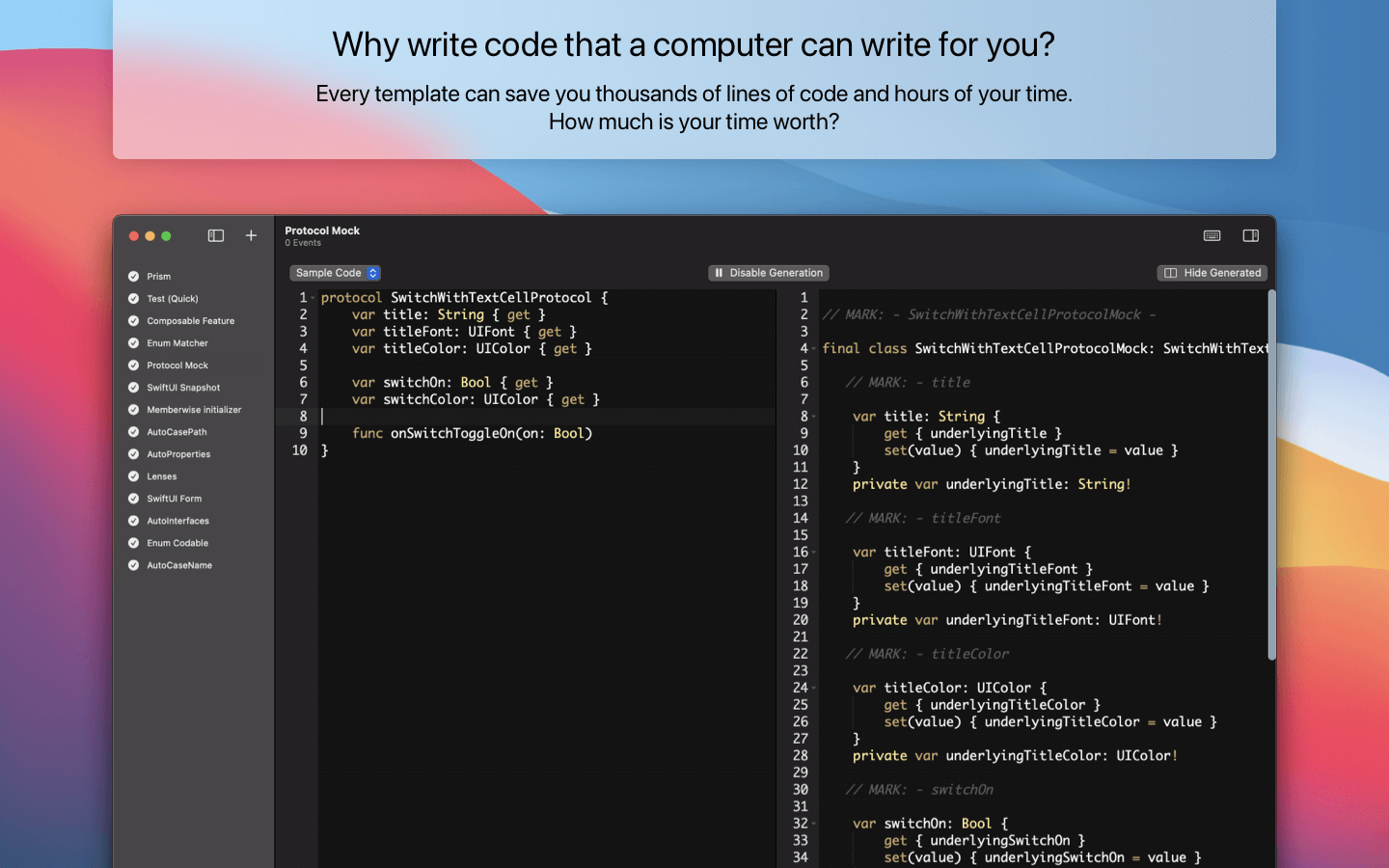
Other than my kids apps and the course, I'm very happy with reception of my developer tool Sourcery Pro which adds ability to create live templates into Xcode, templates that are aware of your type informations.
With Sourcery Pro you can create your own shortcuts that beat Apple's defaults e.g. It added Codable implemenetation for enums before Apple did, and I have over 20 custom templates I use myself in daily work.
Are there any indie makers or creators whose work you admire and follow closely?
Jordi Bruin is not only prolific with the amount of ideas and apps he creates but also embodies the small bets approach with his 2-2-2 approach for verifying ideas.
Khoa Pham ability to create lots of apps while having family and full time job has been inspiring to me.
Could you recommend any specific tools or resources that you believe are helpful for other indie makers, especially those just starting out?
I really enjoyed small bets course and Jordi talk about 2-2-2 approach.
I also don't think you need motivation, you want to create a discipline and processes to reach your priorities, what I found best is building a momentum, even if you only spend 1h on a project doing it daily will lead to momentum build-up, and rolling a ball uphill once it's already moving is a lot easier than starting from scratch.
Thanks for reading til the end. Hope you enjoy the interview as much as we did.
Indie Interviews by Indie Goodies is all about discovering and showcasing indie makers. We firmly believe that behind every app, there's an inspiring tale of passion, creativity, and perseverance. We're always on the lookout for aspiring indie makers to feature in our series, and if you have any suggestions or recommendations, we'd love to hear from you.
Once again, thank you for joining us on this journey. Your support means the world to us. Until next time, keep supporting indie makers, keep exploring innovative apps, and subscribe to Indie Goodies interviews for more.