Indie Interviews


3, 2, 1 then we start 🎉
Welcome to the first interview in the Indie Interview series.
I couldn't be more excited to kick off this adventure with a familiar friend. One of the best thing in this indie journey is get to know other talended individuals and learn from each other. I'm lucky to get to know Kris, who makes great apps, share useful advices and is also a very good friend.
Today let's get to know more about Kris Slazinski. Kris is the maker of Skoro, a handy scoreboard app to keep scores for iOS, and Numi, a personal budget planner for iOS among other apps. He has a UX background, and is an avid guitar player.
Learn, plan, but don’t let anything stop you
Can you tell us more about yourself and what led you to become an indie maker
OK, long story short... 😀 At least I will try to make it short 😂 I always liked computers and technology. As a kid, I was blown away by Star Wars and a few other sci-fi films. I also always loved art, music, drawing, painting.
I started Computer Science studies after high school, but it felt boring. It was mostly math and I was missing the creativity aspect. I decide to quit after 3 months and applied to Fine Arts Academy next year. I studied painting (my major) and graphic design. I have a Master’s Degree in art.
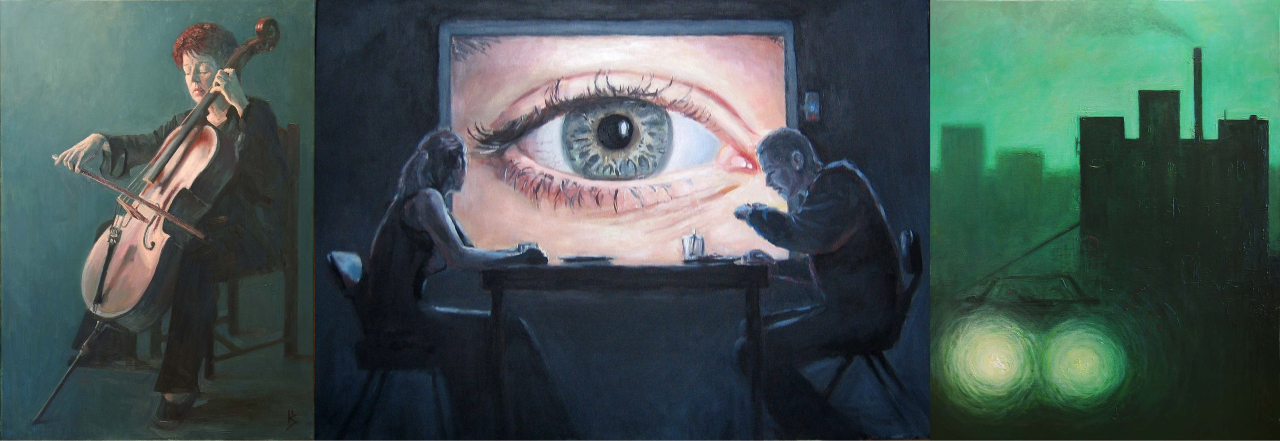
After graduation I started my own business: graphic design and... screenwriting 🙃 When I was still a student I won a contest for a screenplay and I was working as a screenwriter for some time.
I remember one moment that really stuck in my head. I was on the first business lunch with some big filmmakers and film producers and during this first meeting, they already started to plan changes in my screenplay. That moment I understood that my projects are not really mine if I’m not independent.
I also have a music band, Quadroom, that very long time ago decided to be indie. We wanted to have the creative freedom.
Going back to my career... I’ve been working as a graphic designer and web designer and one friend told me about UX. I started learning and took a new direction as I really liked that UX was more tech-oriented and how important empathy is in this field. I’ve been working full-time as a UX Designer for around 10 years. Last few years, for a big software house with big Polish and International clients.
I learned a lot and met many cool people. But there were a few things I didn’t like. As a UX Designer working on many projects, I was always involved only in some part of the project. I didn’t have as much contact with the users as I wanted. More stakeholder meetings than user meetings.
Another thing is that big projects take years. Long process, many steps, big teams, long chain of command.
At that point I was already thinking about building my own products, but there was still one last piece of the puzzle missing. And then one day, Apple introduced SwiftUI and wow! I instantly loved it. An easier way of building apps, with instant visual feedback thanks to Preview Canvas. I decided to give it a try. I designed some apps and started working on them and learning Swift and SwiftUI along the way.
It took me around 2 years to release my first app. It was over a year ago. And I must tell you - so far I love being an indie maker. I make apps, I design them, I have contact with users, I solve their problems. There’s creativity involved, I can use my design skills, I can work with technology, I have creative freedom. And I can release new apps and updates in such a short time compared to big corpo-projects 😃
OK, it wasn’t super short 😆 But something I like to emphasize - we all come with different experiences and skills. And sometimes people think that they wasted time on something. But you know? Later you find out that all the things you learned are important. Our experience and individual paths are important. And it makes us unique.
How did you come up with the idea? How do you generate ideas for your apps or projects, and how do you identify the problems or needs your app can address?
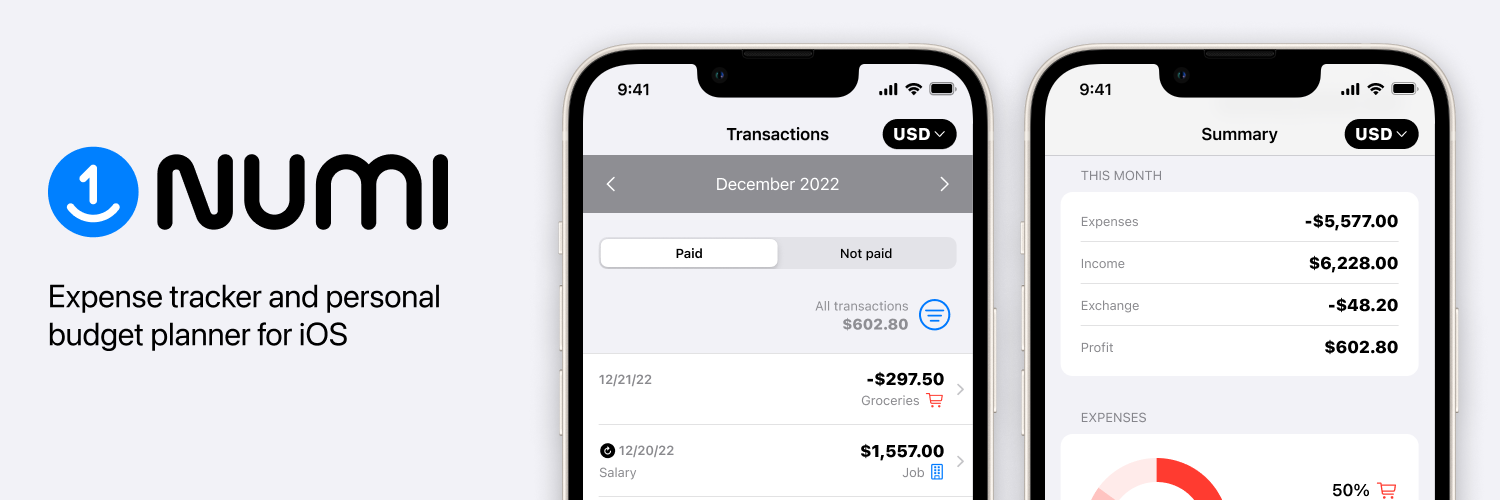
The first app I wanted to make, Numi, was an answer to my own problem. I was never good at managing my finances. I tried many apps and spreadsheets and I decided to create an easy app to track my expenses and plan my finances. It took me around 3 years to build.
When Numi wasn’t ready yet, my parents needed another app. During the COVID- pandemic, they were spending much time at home playing cards. They needed a simple scoreboard app. I said OK and one week later I released Skoro, my first app on the App Store.
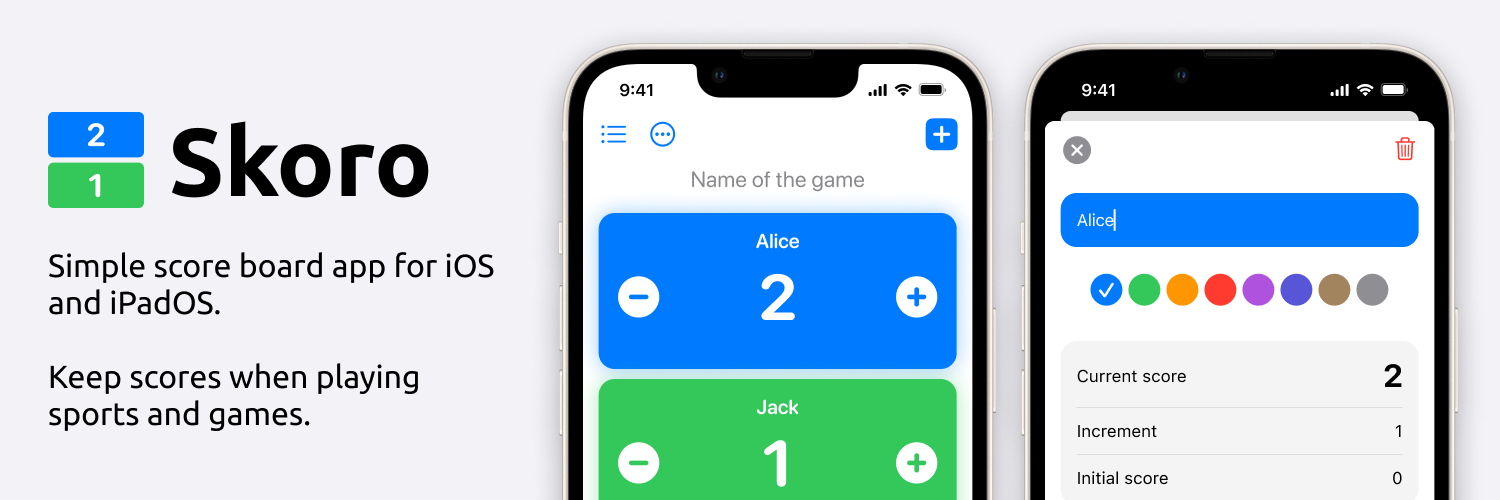
Funnily enough, this 1-week app is still selling much better than my 3-years app 🤪
Lesson learned - a more advanced app doesn’t necessarily mean a better business.
In general, all my apps are made to solve some problems. Often it’s my own problem, sometimes it’s a problem of some people around me. But always the problem is first and the app is a solution. Never the other way around. Every app and every feature of the app is an answer to some problem, some need.
I use my UX skills to decide which problems I can solve and how to solve them. I do research, I check competition, I talk to users, and I test my apps.
How does your day-to-day app development workflow look like?
This is a little tricky. Making apps is still not my main job, not my main source of income. So I often need to take care of my clients first.
I remember when you told me that you have this routine - you wake up earlier 1 or 2 hours, before anyone else in your family and it’s your time for indie projects. I admire you for this. My days look more chaotic. But I have a few things that help me in the long run:
-
✨ I try to be persistent. I track my time and plan my tasks and I work almost every day, including weekends. I don’t recommend overworking (it leads to burnout) and grinding. But I just enjoy working on my projects. Sometimes it’s a few hours, sometimes it’s 1 hour. But I try to move forward every day.
-
✨ I divide my tasks into smaller tasks. It’s easier to finish a smaller task. I avoid procrastination this way.
-
✨ I release new updates often. Even one small new fix or feature is worth an update. I always write posts about these updates on social media. I also celebrate small wins and each small progress. With small tasks, you will celebrate more often 😉
There is a different aspect of this question - about planning the workflow for each project. I always start with research and design. I search for similar apps I want to make. I check how other people solve the problems I want my app to solve. I gather all kinds of ideas and inspirations. Sometimes you can get inspiration for your UI from an app from completely different category. Or even not necessarily from an app. Games, films, books, art.
I design first screens, first workflows. I also talk with potential users. Or just with people that have the problem I want to solve with my app.
Later I make prototypes. Few years ago I was using Sketch and Figma for this. Now I mostly prototype with SwiftUI. I test my prototypes on people around me - often my family and friends. When the app is ready for TestFlight, I test it online with my friends around the world.
I try to release early. MVP for me is a version that solves the problem, that looks nice and doesn’t crash, but also that is not packed with features. Very soon first users tell you about their feature requests. I add new features one by one, release often and ask my users if the changes are better, if this is what they wanted.
How do you launch and market your apps?
I mostly rely on social media, especially Twitter and Mastodon. I also post on LinkedIn and rarely on Facebook, but my main marketing channels are Twitter and Mastodon. At least for the launch part of the question. As I said earlier, I update my apps often. I write posts about each update.
Also, before I launch a new app, I always try to tease people a little. I post some tiny info, to make people guess something about my new app (name or its purpose, for example). I try to make people interested in my new app without revealing too much.
To market my apps I work on App Store Optimization a lot. I research better keywords and localize my metadata and my apps. I spend a lot of my time on screenshots.
Keywords work the best so far. Most of my sales are from App Store Search. 2nd channel is Twitter. I post on Mastodon and LinkedIn as well, I build in public on all 3 social media, but so far the most successful channel after Search is Twitter.
What are the future plans for your apps?
Currently, I am working on my 5th iOS app. I have many ideas for other apps, but I made a decision to slow down with new apps for a while 😅 Managing and improving 4 apps is time-consuming. I will probably make some new apps next year, but right now I will focus on the current ones.

I have 2 main aspects to focus on right now: business model and building new features. I have a long list of features I want to add (some requests from my users but also some ideas of my own).
When I started a few years ago, I had a clear goal: learn to code, and release some apps that solve problems. I was always saying that money is not my main focus at this stage. Money is a great motivation. I am always very happy when someone decides to pay for my app. But it was always less important than learning.
Now I want to focus a little more on this. On the money and business. It’s still not the main reason why I make apps, but if I can manage to build a sustainable iOS app business, I will have more time and resources to work on my projects.
Do you have any interesting lessons learned or tips for other indie makers?
Apart from technical stuff, design and marketing I would like to emphasize 2 things: expectations and networking.
Expectations - you need to know why you are doing this. If it’s your first app/project/ startup - prepare your mind. Building products is not a sprint, it’s a marathon. There are so many things to learn. And the way to success is not easy. I don’t want to discourage anyone. Do what you love, do what you want to do. But prepare yourself mentally and financially for this - you will need time to get what you want.
Networking - very related to expectations. Find like-minded people. You will learn so much from them. They will help you to learn. They will share their stories and their solutions. They will help you get up when you’ll fall. Use #buildinpublic and find people that have similar goals. Make new friends. Help them. Share your knowledge. It’s so much easier having people to support you and motivate you. I am very grateful for all the help I got from other indie makers. And very happy to call many of them friends.
Looking back, are there any decisions or actions you regret not taking before or during the development and launch of your apps? Is there anything you would have done differently?
From the technical perspective - add App Groups support to your iOS app 😅 If there is even a small chance you might need it, add it in version 1.
If you are here for the money - learn about IAPs and subscriptions. Think about the business aspect early on.
Release early. Don’t spend years on building features that you don’t know if anyone wants. Build an MVP and test it with many people. Validate your ideas quickly. Move forward, don’t waste time.
Even though I would now make these and a few other things differently, I don’t necessarily regret my choices. I learned a lot. So I would say - learn, plan, but don’t let anything stop you. Do your thing. Move forward. Release your app. There is no better way to learn how to release your app than actually releasing your app.
Are there any indie makers or creators whose work you admire and follow closely?
Sure! Many. For example, you and your brother Kenny. You have a great portfolio of apps. I am amazed at how productive you are. And I like how you work as a team.
I have many close friends now in the indie makers community. Many people who I admire and who help me or help other makers. It’s hard to choose only a few names.
One indie developer who I admire very much is Matteo Spada @matteo_spada, creator of Astro. A great friend and a great developer. He created an app I am using on an almost daily basis. I really like that Matteo doesn’t only build new features, but also has many great marketing ideas. He built a landing page with a waiting list, wrote an eBook about ASO, made an iOS app that supports his main product. His work is really inspiring.
I also love the creativity of Emin Grbo @emin_ui. He has many cool app ideas, he tries many different things. And his UI design skills are amazing. His apps and app screenshots deserve a place in some art gallery, they are pieces of art.
Could you recommend any specific tools or resources that you believe are helpful for other indie makers, especially those just starting out?
One great tool I cannot live without is the previously mentioned ASO tool Astro. I use it all the time for all my apps to find better keywords. Astro helped me very much with promoting my app and finding new users.
Another cool product worth trying is WishKit by Martin Lasek. With WishKit, you can easily add a Feature Wishlist to your iOS app so your users could tell you which features they need and other users could vote on those ideas.
Also, recently I wrote an article on my blog about the UI resources that I use when designing and developing my iOS apps: UI resources for iOS developers and designers
Thanks for reading til the end. Hope you enjoy the interview as much as we did. Below are some useful links mentioned throughout the interview
- Kris Slazinski
- Matteo Spada
- Emin Grbo
- Martin Lasek
- Astro ASO Tool
- WishKit
- Kenny
- UI resources for iOS developers and designers
Indie Interviews by Indie Goodies is all about discovering and showcasing indie makers. We firmly believe that behind every app, there's an inspiring tale of passion, creativity, and perseverance. We're always on the lookout for aspiring indie makers to feature in our series, and if you have any suggestions or recommendations, we'd love to hear from you.
Once again, thank you for joining us on this journey. Your support means the world to us. Until next time, keep supporting indie makers, keep exploring innovative apps, and subscribe to Indie Goodies interviews for more.