Indie Interviews


Can you tell us more about yourself and what led you to become an indie maker
Hello! We’re Pol Piella and Hidde van der Ploeg.
Hidde, based in Amsterdam, has a background in design. He taught himself to code because he always wanted to build his own ideas. By the end of 2021, he became a full-time indie developer. Pol, based in Barcelona, has been a developer for Apple platforms for over 6 years. He worked at companies like BBC and Glovo. After working on more and more personal projects, he realised he loved the creative freedom and made the switch to indie development earlier this year. We met during a conference in Amsterdam and became good friends when we both lived in Manchester, leading to us working together on a few projects since 2023.
How did you come up with the idea? How do you generate ideas for your apps or projects, and how do you identify the problems or needs your app can address?
Most of our ideas originate from our own frustrations. With Helm, we constantly find opportunities to improve things since we use it daily. We’re always reminded of potential improvements because we use Helm to release updates for Helm and all our other apps. Additionally, we make a conscious effort to listen to our users. As we both do a lot of public speaking, it makes it easy to find and talk to fellow developers to understand their needs.
How is your day-to-day app development workflow look like?
As we both work on multiple projects at the same time, we don’t have a fixed structure in place. Instead, we frequently check in with each other and keep each other informed about our progress. Both of us have access to the support mail and ensure that every bug or feedback request is captured in Linear. Every few weeks, we review all bug reports and prioritise them.
Given that we work with a large external API that has an extreme amount of edge cases, it’s crucial for us to collect as many errors as possible. For new features, Hidde typically begins building the user interface with all the expected data, while Pol then works his magic to make it functional and stable. Sometimes, its reversed (Pol starts and then Hidde polishes the design), but we rarely work on the same thing simultaneously.
How do you launch and market your app?
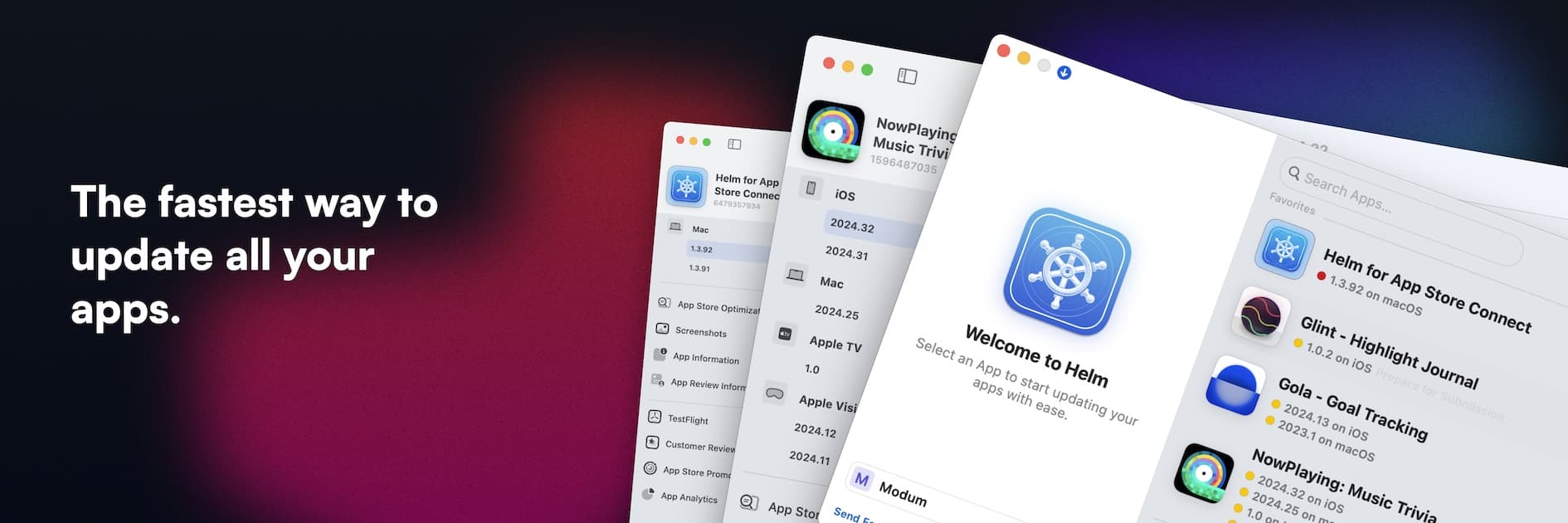
We began building hype early, teasing features that set Helm apart and show how it solves some of the frustrations of App Store Connect. It also really helped that we’re both well-connected to the community since we both do a lot of public speaking.
Additionally, we offered a free beta sign-up with an optional donation for even earlier access, which motivated us a lot because many users showed interest by paying for the concept.
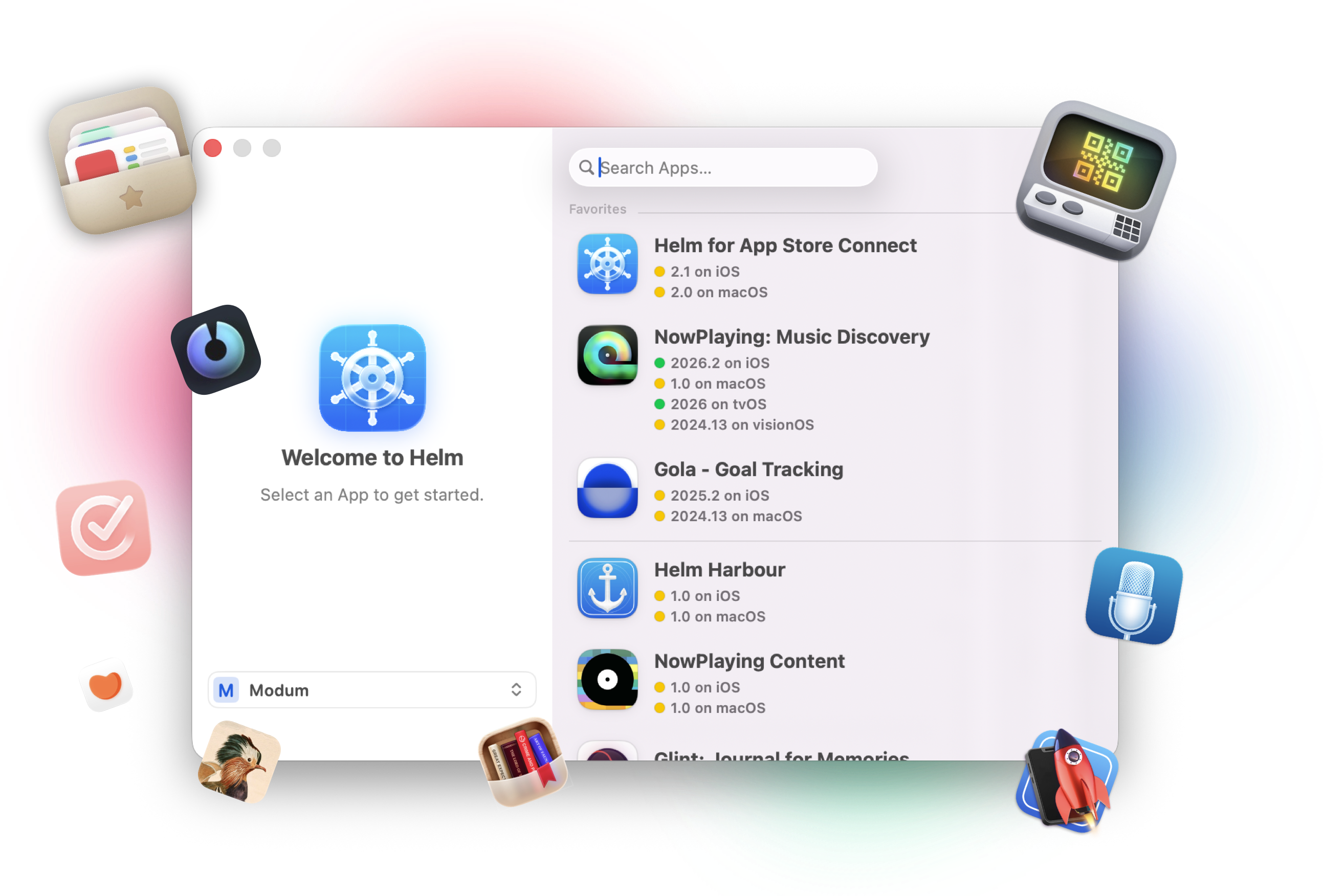
The strategy of building hype was really powerful. Even during the beta phase, we noticed a crowd of users actively promoting Helm when others complained about App Store Connect in public. As a bonus, we allow all our users to submit their apps to us after submitting an update using Helm. This enabled us to display their app’s name, link, and icon on our website, showcasing apps that already utilise Helm.
This approach creates trust among potential users unfamiliar with Helm while simultaneously serving as a free promotion for our users (who doesn’t love to see their app being promoted somewhere?).
Initially, we planned to launch the app during a conference, but unfortunately, we were stuck “In Review” for at least six weeks, preventing this from happening.
What are the future plans for your app?
Oh, we have many exciting things in store for you in the future! Some obvious ones are Analytics and the iOS app. However, we also plan to take on some bigger projects, such as implementing a clear submission history. This feature will allow you to track the impact of any ASO changes.
In all honesty, our primary focus is on achieving near-full feature parity with the App Store Connect website. The main reason of this delay is that we want to take on one resource at a time and reimagine how it should work. Our goal is to go beyond being just a UI wrapper on an API; we want to make your life as an app developer easier.
Do you have any interesting lessons learned or tips for other indie makers?
Building Helm taught us a lot about collaboration. It really sped up product development and improved quality. As a team of two, we have different skills and tackle different tasks. Pol is tech-savvy, deals more with the data side of things and loves optimizing the app’s performance. Hidde is a design expert with a lot of experience shipping SwiftUI apps, and is responsible for crafting and building delightful user experiences. We feel at this point that this collaboration is crucial to Helm’s success and, as a plus, we have a lot of fun working together!
From the very beginning, we decided to build one feature at a time instead of trying to tackle too much at once. This is something we thoroughly recommend other people do as it has allowed us to really understand each part of the app in great detail and focus on delivering the best possible experience for our users.
During this feature development, we also try to share early betas with our users, who are highly engaged and provide incredibly valuable feedback.
Looking back, are there any decisions or actions you regret not taking before or during the development and launch of your apps? Is there anything you would have done differently?
There’s not much we regret in the short time that we have been building Helm but there are a couple of things that we think we could have done better:
Our launch was a bit of a disaster, we submitted for review very close to the date that we intended to launch at and everything that could wrong did in fact go wrong. We were stuck in review for a very long time (Helm spent more than 1.61% of 2024 in review) and we had several rejections and had to go back and forth with the App Store Review team, hence missing our target launch date. Looking back, we could probably have submitted the app earlier to have more buffer time for unexpected delays.
We built all of the business logic and code to interact with the App Store Connect API in the app instead of building our own dedicated server to handle this logic. Unfortunately, the App Store Connect API can be temperamental at times and we are constantly trying to find workarounds when endpoints start acting up. If we had chosen a server, we could deploy these workarounds to all users within seconds, instead of having to release a new version of the app. We’re definitely going to be migrating some logic over to the Back End in the near future to give us more flexibility.
Are there any other products that you are particularly proud of? Could you share some details about them.
Our other project, NowPlaying, is the one that always helps us jump back into something that’s so close to our hearts—music. It feels completely different from any of our other projects. It’s the app we challenge ourselves to do things differently while keeping it exciting. We experiment with a lot of Apple’s APIs and platforms.

We envision NowPlaying as the ultimate music companion app that helps you discover more music, find stories, and be entertained.
Are there any indie makers or creators whose work you admire and follow closely?
There are so many people we admire for their work and the incredible things they do. Here’s a quick rundown of a few of them:
- • Antoine van der Lee: He’s incredibly disciplined and effortlessly creates impressive content.
- • Jordi Bruin: He’s always incredibly quick-thinking and a fantastic partner for brainstorming sessions.
- • Seb Vidal: No one knows more about private APIs than Seb. We genuinely hope he works at Apple someday to make them all publicly available.
- • Tunde Adegoroye: His tutorials are the most lovable and entertaining on the web. He makes even the most boring topics fun and understandable.
- • Noam Efergan: He’s always willing to speak his mind and share his thoughts with anyone.
- • Andy Allen: Everything Andy does inspires us. We completely align with his mindset that software shouldn’t be boring.
- • Frederik Riedel & Leo Mehlig: Both are incredibly successful indie developers, but they remain incredibly humble and down-to-earth. Must be a German thing.
- • Klemens Strasser: He’s simply brilliant and kind, but he doesn’t realize how brilliant he is. He’s also one of the masters of accessibility.
And there are so many other friends who would make this list too long to post. Every indie developer inspires us in their own unique way.
Could you recommend any specific tools or resources that you believe are helpful for other indie makers, especially those just starting out?
Apple’s developer videos and lab sessions are the best resources available.
RocketSim is our go-to tool to boost our productivity when using the simulator, while Linear is our primary source of planning and task tracking. We couldn’t function either.
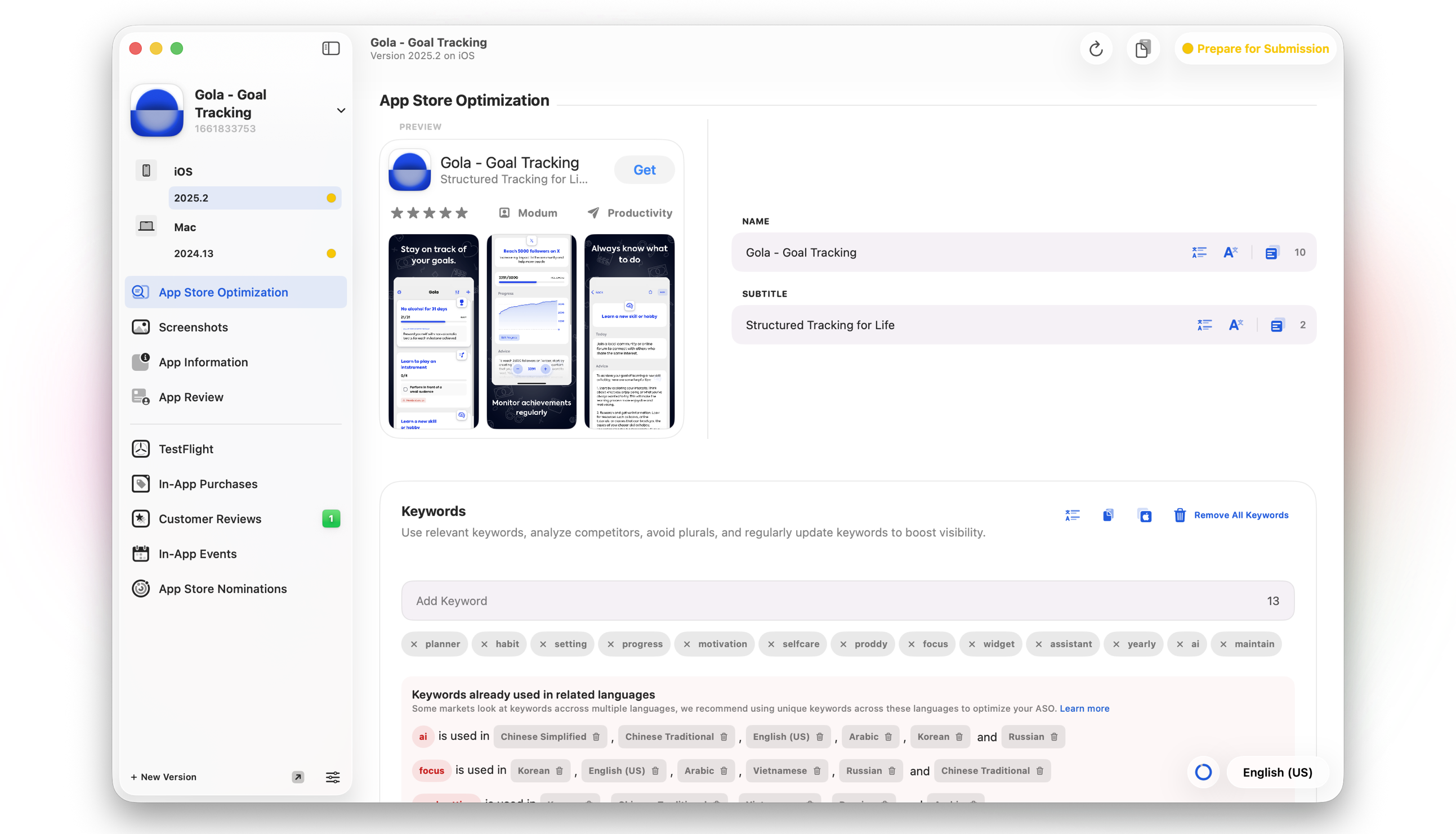
Of course, the best developer tool to mention here is our own: Helm, the all-in- one macOS app that replaces App Store Connect. It supercharges your app updates, localization, and ASO with AI-powered tools.
Discount ✨
Helm offers a 30% discount on Pro Yearly for all Indie Goodies readers, you can get via this link
Thanks for reading til the end. Hope you enjoy the interview as much as we did.
Indie Interviews by Indie Goodies is all about discovering and showcasing indie makers. We firmly believe that behind every app, there's an inspiring tale of passion, creativity, and perseverance. We're always on the lookout for aspiring indie makers to feature in our series, and if you have any suggestions or recommendations, we'd love to hear from you.
Once again, thank you for joining us on this journey. Your support means the world to us. Until next time, keep supporting indie makers, keep exploring innovative apps, and subscribe to Indie Goodies interviews for more.