Indie Interviews

Can you tell us more about yourself and what led you to become an indie maker
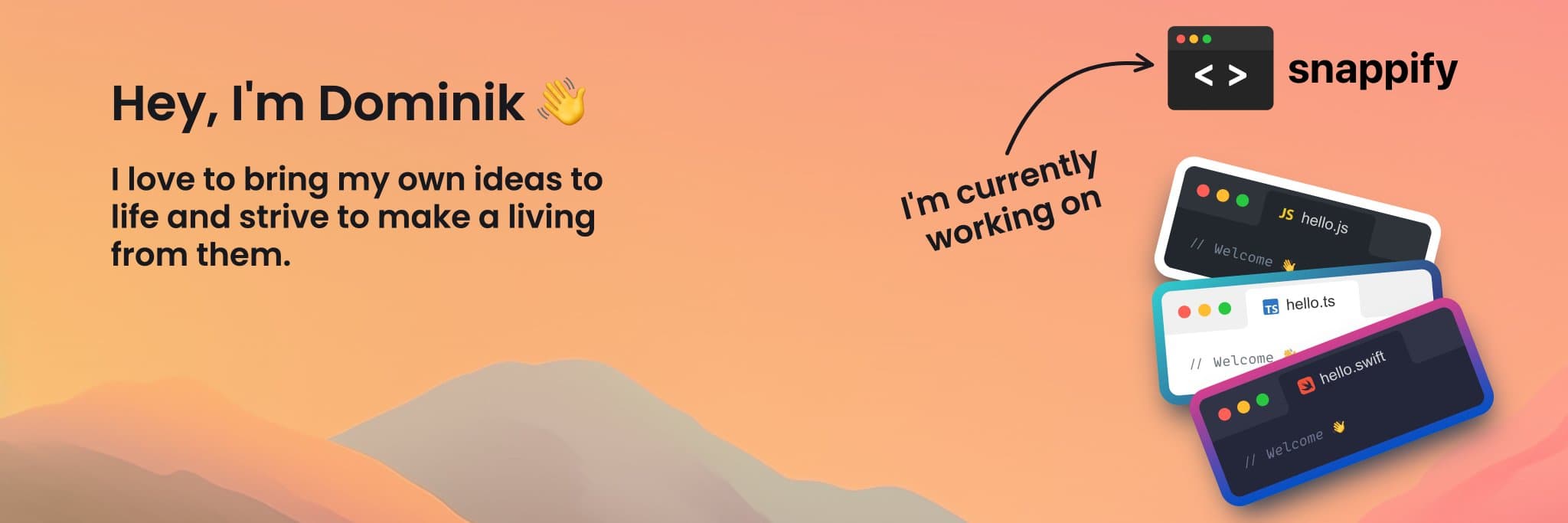
Hey, my name is Dominik, I’m 30 years old and I always loved fiddling around with software (mainly web development) since I was a teenager.
I also was an enthusiastic video gamer and spent a good amount of my time surfing the web and hanging around in several communities. Since then I always wanted to know how these things work and dug deeper until, step by step, I was able to build small tools on my own.
In 2010 I started working on my own browser game, and during this time I learned a lot of things about web development, design, marketing, and even team management.
This was also the time when I realized that building my own products, and doing it sustainably so I can make a living from it, is one of the biggest goals in my life. Also because it’s my hobby and I really enjoy doing it, including all the different aspects.
This is how I ended up calling myself an indie hacker and connecting with like-minded people.
How did you come up with the idea? How do you generate ideas for your apps or projects, and how do you identify the problems or needs your app can address?

In 2020 my friend Anki and I started building our first software product together. It was the beginning of the pandemic and we had a lot of time. Time we spent building our product in private for about 9 months until we released it. And then boom: nothing happened 😅
It’s when I realized that when you don’t have an audience or a place where you can reach a good amount of people, it’s super hard to get people to know about your product. Especially with no skills and budget for SEO or Marketing in general.
So I got more active on Twitter and the Indie Hackers community. I really enjoyed it, posting my experiences and also some technical content. And then we saw more and more people posting their code snippets in a fancy way. We looked into existing solutions and thought: that’s something which we could do better!
That’s how the idea for snappify was born and since then we pivoted it from a simple code-snippet sharing tool, into a fully-fledged presentation and video creation SaaS for software developers.
How is your day-to-day app development workflow look like?
As I’m still not ramen profitable, I also do freelancing projects on the side. There I love to work in blocks, like several months of full-time freelancing gigs, followed by several months of working on my products full-time. Even though I’m still trying to work on my products on the side as good as possible while I’m freelancing, it’s the months when I can work on them full-time that make the difference.
Apart from that, I love to rotate on several activities, either daily or sometimes on a weekly basis. For example one week I’m focused on developing new features, the other I’m busy designing a landing page or UI, and on the next, I’m planning marketing opportunities. This way I’m also avoiding getting bored and working on several parts of my product also avoids getting tunnel vision.
How do you launch and market your app?
I mainly market snappify via my Social Media channels on X and LinkedIn. This is how we got our first chunk of users - by building in public.
snappify also has a built-in viral effect. People build beautiful images of code snippets, technical presentations, or videos. When they share it, people often ask how they made it, which is great word of mouth. That’s also a good way for us to find new users.
In August we released a Promotion video on YouTube, which was the biggest marketing move we made so far, leading to a lot of new traffic and new customers.
What are the future plans for your app?
We have quite some ideas, but the overall goal is to provide developers with the best way to create technical presentations, videos, or explanatory content with our state-of-the-art editor.
There is still a lot of great potential in making it easy to create powerful presentations and videos using snappify and we have a lot of ideas in that area.
Additionally, we also want to explore and extend more of the embedding / sharing functionality that we already have in place, plus give users more possibilities to create content on snappify programmatically via our API.
Do you have any interesting lessons learned or tips for other indie makers?
My biggest lessons are:
-
Build in Public: Try to build in public and share your journey as soon as possible. It helps you to get feedback and has many other benefits like connecting with other founders and getting more people to know about your product.
-
Try to do something better instead of inventing something new: In the beginning, it’s super hard to invent something new and validate it to see if there’s a market. In my opinion, it’s better to start out with an existing idea / market. Look out for something you’d have a passion for, where you see other products, but also can see that you can improve things on top.
-
Stop Overthinking: It can really be overwhelming to start out with a new product and when you think about all possible things you could tackle in the beginning you can get paralyzed. I’d suggest starting out with the task you’re having the most fun with and then getting it going step-by-step. You can and shouldn’t plan everything in advance.
-
Try to avoid Shiny Object Syndrom: You’ll see other founders and their products and maybe think: should I build something similar? It’s extremely easy to fall into product hopping, but be aware. Building a product takes time and you should prepare yourself for it.
Looking back, are there any decisions or actions you regret not taking before or during the development and launch of your apps? Is there anything you would have done differently?
Most of the things I’ve summed up in my lessons learned are coming from mistakes I made and I’d like to have avoided early on.
Probably building in public is the biggest one. Get yourself out there, share your idea, get feedback, and iterate on it.
With that being said: everyone has to go through some mistakes on their own in my opinion. It’s good to get tips and try to avoid mistakes from the beginning, but in the end, you have to make the experience and see what works for you. Sometimes you need a failure to see what doesn’t work and what does.
Are there any other products that you are particularly proud of? Could you share some details about them
The Browser Game I mentioned earlier which I started in 2010 is something I’m really proud of in particular. It showed me what’s possible and ignited the sparks for building my own products. Maybe someday I’m going to overhaul it and make another Browser Game based on the idea :)
Apart from that, I’m planning to launch some new products in 2024 and I’m already excited to start building them in public.
Are there any indie makers or creators whose work you admire and follow closely?
Over the years I met so many great people in this community. I’ll pick some that come to my mind, but just to say, it’s impossible to mention everyone and there are many more great people!
Blakey, Luca Restagno, Jim Raptis, Wilson Wilson, Wilbert Liu, Marek Sotak, Borislav Grigorov, Yossi Segev, Amine, Marie Ng, Daniel Cranney, Dominik Sobe , Thomas Sanlis, Jason Leow, Dmytro Krasun, Lukas Hermann, Daniel Nguyen
Could you recommend any specific tools or resources that you believe are helpful for other indie makers, especially those just starting out?
For me, the biggest help was, without a doubt, Twitter. I’ve met so many smart people, could learn so much from them, and even managed to find my first customers there.
Those are the points where this platform can lead to life-changing events, and I just can recommend giving it a try.
Thanks for reading til the end. Hope you enjoy the interview as much as we did.
Indie Interviews by Indie Goodies is all about discovering and showcasing indie makers. We firmly believe that behind every app, there's an inspiring tale of passion, creativity, and perseverance. We're always on the lookout for aspiring indie makers to feature in our series, and if you have any suggestions or recommendations, we'd love to hear from you.
Once again, thank you for joining us on this journey. Your support means the world to us. Until next time, keep supporting indie makers, keep exploring innovative apps, and subscribe to Indie Goodies interviews for more.