Indie Interviews


Can you tell us more about yourself and what led you to become an indie maker
I'm 44 years old and live in Stockholm, Sweden with my wife and two daughters. I've worked with app development for iOS for 10+ years, after working almost as long as a full stack developer with focus on web, backend (.NET), databases and REST-based APIs.
I've loved hand-held experiences since the Game & Watch days, and joined a company that developed .NET-based PDA applications for mobile workforces in the mid 2000s. When the iPhone was released a few years later, I immediately knew that this was what I'd been waiting for all these years.
Since I was still working as a .NET consultant at that time, I had to get to know the Mac ecosystem and learn iOS app development in my spare time. My first iOS app was a web app that used Safari's location capabilities to store geo-tagged items in local storage, then fetch the closest one when the user opened the app.
Building web-based apps on my new, white MacBook was a fun start, but I always knew I had to go native. Objective-C was a hard pill to swallow, but thanks to iTunes U and Paul Hegarty's Stanford app development courses, I eventually felt ready to convert the web app to a native one.
After a year or so, I got my first mobile lead job at the Swedish eBay brand, where I was in charge of the company's iOS and Android apps. I've kept sticking to native ever since and try to keep up with the latest stuff, like switching from Obj-C to Swift immediately when it launched, and from UIKit to SwiftUI in its first rough year.
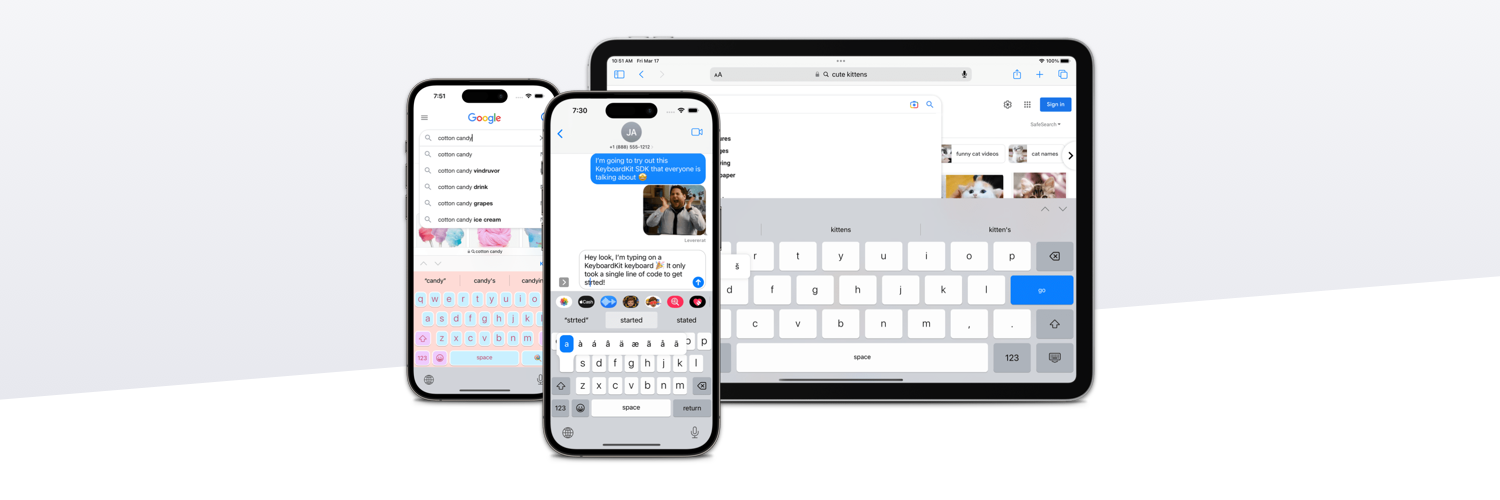
As a parallel track to app development, I started building open-source libraries to reuse and share general things I came up with while building my own apps. This eventually led me to create a library called KeyboardKit as I created my first custom keyboard together with a friend.
As KeyboardKit evolved, and being quite a niche thing, some companies started reaching out to me regarding freelance work. This eventually led me to quit my day job and start my own company, in which I combine freelancing with building my own apps and open-source projects, and a few commercial SDKs.
How did you come up with the idea? How do you generate ideas for your apps or projects, and how do you identify the problems or needs your app can address?
My first keyboard app was a result of a digital artist friend of mine reaching out, asking if I'd be interested in creating a sticker keyboard for her. The app was meant to behave like the Kim Kardashian sticker keyboard app, but with my friend's goth metal-inspired artwork.
The keyboard SDK idea came naturally, as we decided to create a second keyboard and wanted to share logic between the two. The keyboard SDK then became an itch I kept scratching, since the native APIs lack so much functionality and the keyboard domain kept unveiling more and more interesting complexities as I went further down the rabbit hole.
Regarding my other apps and projects, I just work on whatever I need at the moment or find interesting. I don't have a set strategy for what project to spend time on, but rather work on projects that currently have traction, where I have user or customer feedback to focus on, or where I need things myself.
I however need to improve this process, since I now have a company that is meant to make money. For instance, I've just spent a couple of days on a completely free app, and if you count the time spent and take my regular hourly rate into consideration, you realize that it's a pretty expensive hobby.
How does your day-to-day app development workflow look like?
I plan my work in Trello and GitHub issues, and have a long personal roadmap, as well as client work that I need to combine. I've put a lot of time into streamlining my own web and app projects, by creating shared structures that help me minimize context switching when working on multiple projects in parallel.
Client work always goes first, then customer and user feedback. I then work on improving my existing projects, and only occasionally build something new. I then always tend to skip the last important step to market what I create, and therefore make very little sales.
Jokes aside, I struggle with marketing and always tend to find new technical challenges to solve instead of spending time on it. I have however started putting a lot of time into improving my various websites, and have started looking more into SEO and ASO as well.
How do you launch and market your app?
I release many things, all the time. New app updates, new SDK versions, new websites, blogs, articles, etc. etc. But...I struggle with reachout, and have noticed a considerable engagement dip in social media during 2023. I realize that I need to develop new strategies, rather than just tweeting and tooting when I release new things.
What are the future plans for your app?
I will keep improving some apps that I've just released, and will try to merge many of my smaller and way too old apps into more capable ones, bumping them to the latest standards when I do. I will also create new, smaller apps with a single, clear business case, and try to find more revenue streams than putting my faith into a few big bets.
Do you have any interesting lessons learned or tips for other indie makers?
My recurring mistake is to over and over again spread myself too thin by working on too many things at the same time. I would suggest sticking to one or two things, and making them as good as you can, instead of working on tons of parallel projects that just turn out decent.
Looking back, are there any decisions or actions you regret not taking before or during the development and launch of your apps? Is there anything you would have done differently?
I don't really regret working on so many different things per se, but it has often spread me thin and brought me to the brink of burning out. The reason why I don't regret it, is that it often has been very fun and taught me a lot...but I sometimes think about what it would have been like if I had focused on one or two things at a time, instead of ten or twenty.
If I could go back, I'd also start with a business case for every new app or project that I started working on, and say no to more projects with others, since that has most often been the ones adding stress and frustration to the mix.
Are there any other products that you are particularly proud of? Could you share some details about them
I am quite proud of most of my projects, although KeyboardKit and RichTextKit are probably the ones where I've struggled the most and eventually managed to deliver something that seems to help people handle pretty complicated things in an easier way.
Are there any indie makers or creators whose work you admire and follow closely?
There are SO many truly inspiring indie developers who brighten my Twitter and Mastodon timelines on a daily basis, so instead of risking to forget some of them, I will settle with mentioning how @jordibruin and @twannl are two exceptional developers who constantly keep delivering new exciting things, how I enjoy following @malinsundberg and @airkai working on Mercury Weather and many other cool things while still finding the time to bring the community together, and finally how I love seeing @jagcesar and @fosiadesign exploring new worlds and platform capabilities together. And you of course ;)
Could you recommend any specific tools or resources that you believe are helpful for other indie makers, especially those just starting out?
I am deeply impressed by Paul Hudson's tireless and ongoing efforts to provide the Swift and SwiftUI community with constant updates and learnings, so if you're starting out with Swift and SwiftUI or just need a boost, do check out Hacking with Swift for its endless amount of amazing content.
Thanks for reading til the end. Hope you enjoy the interview as much as we did. Below are some useful links mentioned throughout the interview
Indie Interviews by Indie Goodies is all about discovering and showcasing indie makers. We firmly believe that behind every app, there's an inspiring tale of passion, creativity, and perseverance. We're always on the lookout for aspiring indie makers to feature in our series, and if you have any suggestions or recommendations, we'd love to hear from you.
Once again, thank you for joining us on this journey. Your support means the world to us. Until next time, keep supporting indie makers, keep exploring innovative apps, and subscribe to Indie Goodies interviews for more.