Indie Interviews


Can you tell us more about yourself and what led you to become an indie maker
I'm Axel, a 35-year-old guy from France, currently living in Paris with my wife and 2-year-old son.
After graduating from engineering school, I worked in startups as a project manager and later as a product leader in a startup studio. Working closely with developers on various products sparked my curiosity about app development. I started coding for personal projects and it became a beloved hobby.
Two years ago, I made a significant shift. I left product management to fully embrace indie app development. What I love is the whole product creation process - from generating ideas, designing user-friendly interfaces, and coding, to handling business, marketing, and user support.
How did you come up with the idea? How do you generate ideas for your apps or projects, and how do you identify the problems or needs your app can address?
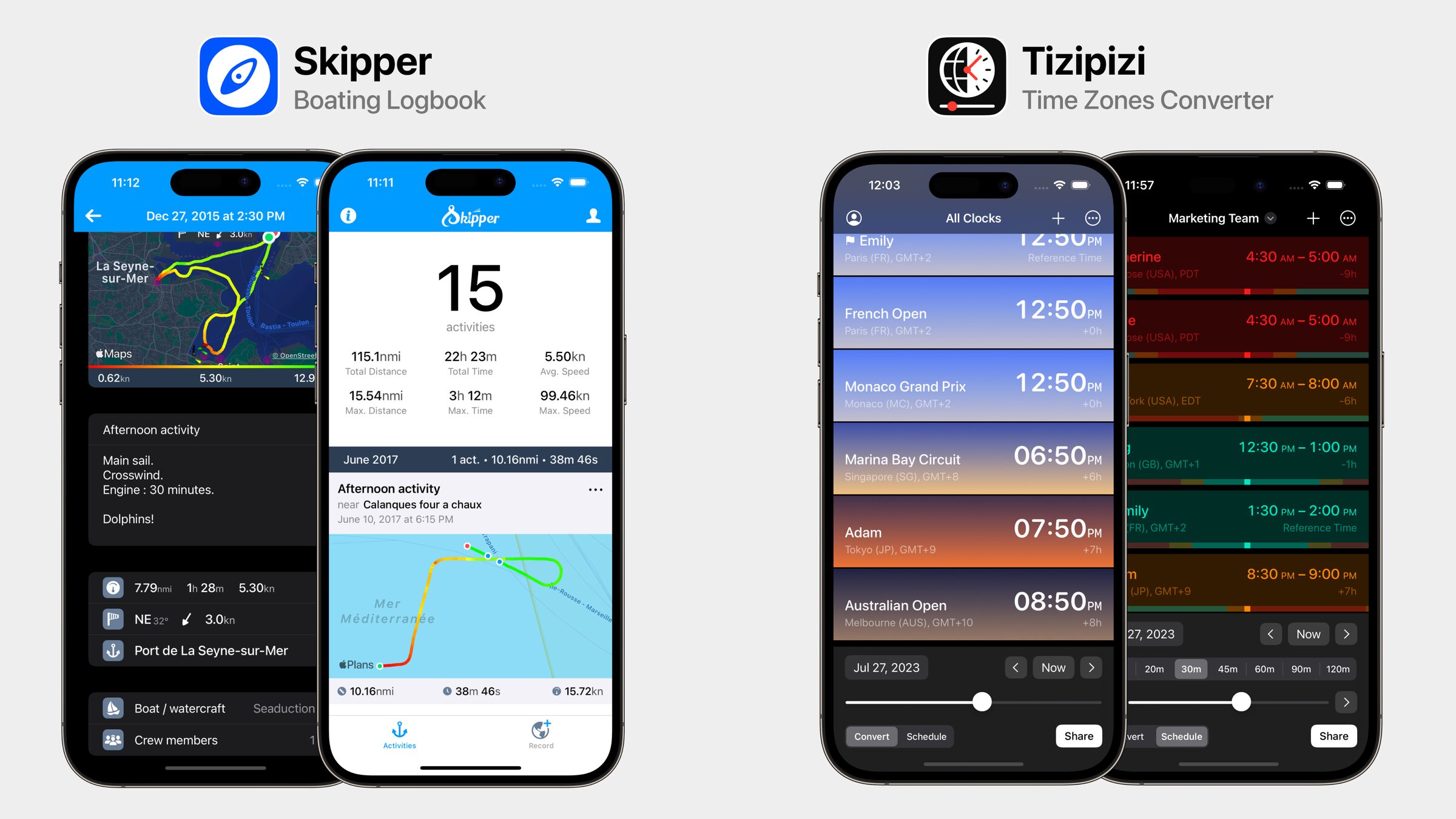
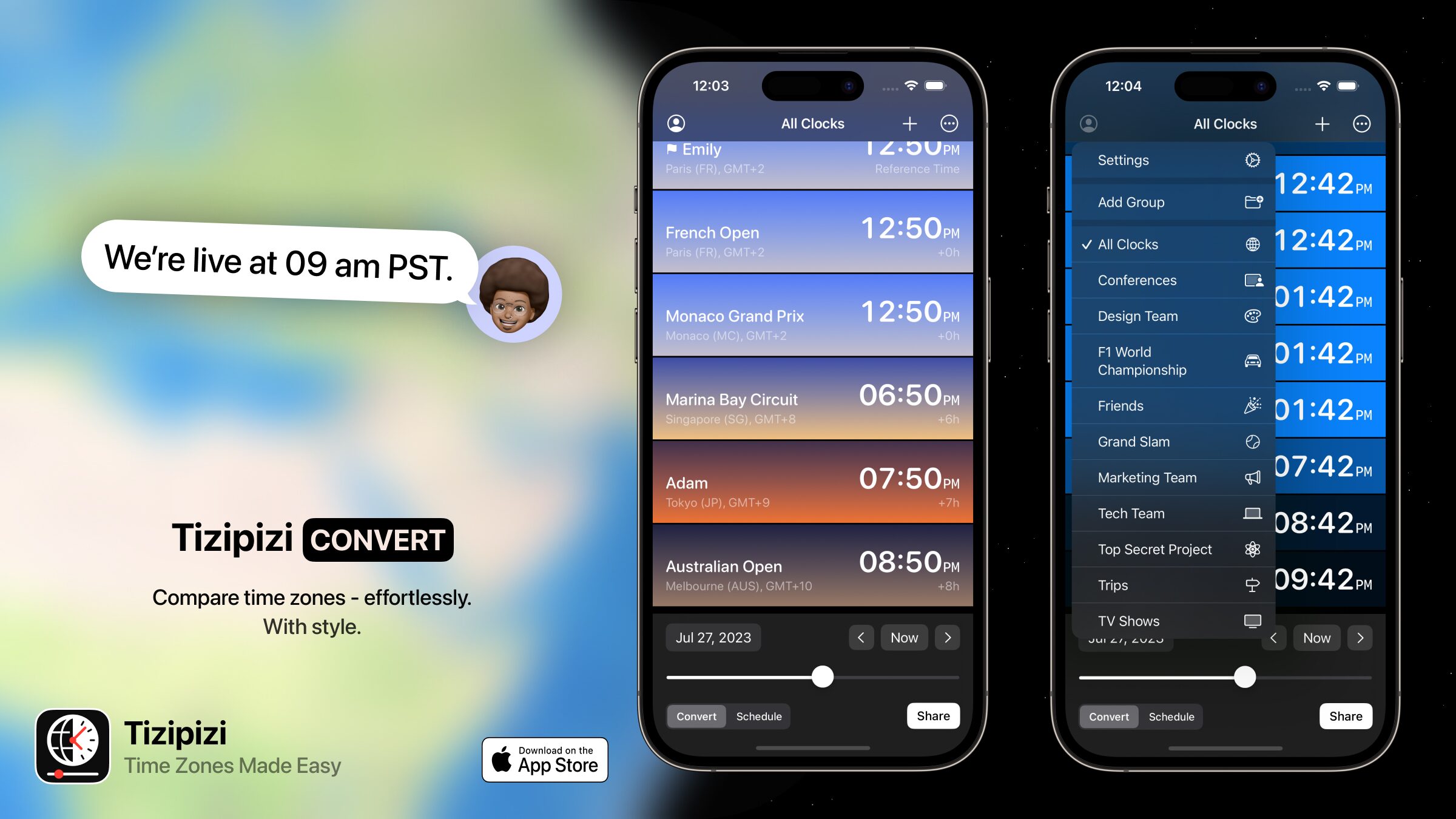
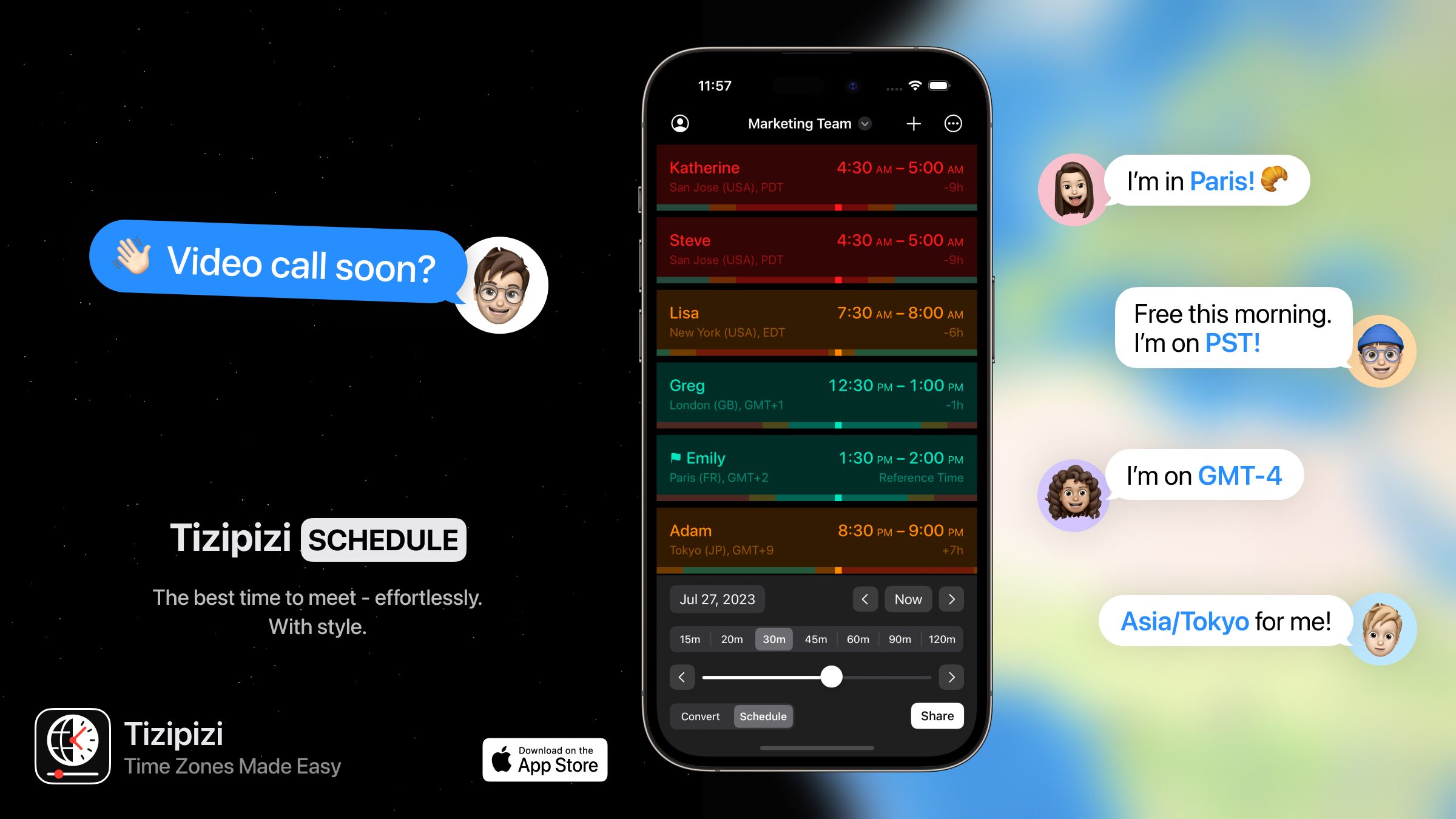
I got the idea for my latest app, Tizipizi, when I worried about missing content from Apple WWDC23. I realized the iOS built-in world clock app didn't cut it for checking different times conveniently. So, I decided to create my own app. I shared a TestFlight link on social media for early testers and the feedback I received showed me that time zones are a pain and people are eager for ways to simplify it.
My idea process is simple. I start with issues I face during the day and ask, "How could an app help me?" and "What could this app replace or improve?”. Then, I see if people I know have the same problem. First, I confirm the problem, and only then do I think about solutions. I create a basic version to test if it works well and offers sufficient value. To understand more about users and their needs, I spread the word about the app.
How does your day-to-day app development workflow look like?
These days, I structure my day around my son's schedule. I wake up at around 6:30 am and spend time with him until I drop him off at the nursery around 8:15 am. After that, I take a short walk in a nearby park to catch up on social media and get in the right mindset. I typically start working at my desk by 9 am, although I admit I don't have a strict plan (which I might need for better productivity). My work pattern depends on where I am in the app development cycle and what tasks are at hand.
I find that I'm most productive with coding in the morning, leaving design, marketing, and business tasks for later in the day or evening. Some days, I focus solely on coding as I work on big features. I usually work until 5 pm, then take a 2-hour break to spend time with my child (picking him up from the nursery and being with him until bedtime). After dinner, I often put in a bit more work.
During weekends and holidays, I do work during the day, but my main focus remains on family time.
How do you launch and market your app?
I started by having a private beta with friends and family—people I'm close to and who would give honest feedback. After that, I opened up the beta with a public TestFlight link so anyone could try it. Finally, I launched the app on the App Store.
Here's what I did at launch:
-
✨ Social Networks: I used social networks to announce the app release. I posted content prepared in advance, like text and visuals, highlighting the app's key features and best use cases. This helped people understand the app's purpose and potential.
-
✨ Influencers: I reached out to fellow developers who were willing to amplify the app on social networks. For instance, developers like Steven Troughton-Smith and Donny Wals were supportive. They helped increase visibility.
-
✨ Product Hunt: I made a ProductHunt post using prepared materials like hero images and app descriptions.
-
✨ Journalists: I created a Press Kit and contacted journalists to inform them about the app. I offered them a subscription so they could fully experience the app. I targeted tech/Apple news writers but also those in the app's domain (productivity/travellers).
-
✨ Apple Editorial Team: I notified Apple about the app launch by submitting a form to the App Store editorial team. I emphasized what makes the app unique and highlighted any innovative technologies I used.
-
✨ TestFlight: I updated the TestFlight beta version to inform testers about the app's availability on the store. The update included a screen with a direct link to download the app.
I haven't used ads or partnered with influencers on platforms like TikTok or Instagram yet, but I'm considering it for future updates. Emmanuel Crouvisier reportedly had success with this approach.
What are the future plans for your app?
Here are my main goals for the upcoming weeks:
-
✨ Understanding User Needs: Instead of building an app that nobody wants, I aim to learn more about my initial users. This involves understanding why they use the app, the problems it solves for them, how they use it, their satisfaction, potential improvements, and more. To gather this information, I plan to include an optional form within the app for users to anonymously share their thoughts.
-
✨ Gathering Feature Requests: Alongside incorporating new platforms and technologies, I'm interested in exploring additional features. These could include full calendar integration or considering weekends/vacations in the meeting planner. To prioritize what to add next, I intend to allow users to upvote feature requests and propose ideas. This approach should enhance user satisfaction, retention, and encourage more users to become paying customers.
-
✨ Enhancing App Store Visibility (ASO): My initial ASO efforts involve localizing the App Store metadata in all available languages. This localization is expected to enhance the app's discoverability and searchability. Subsequently, I plan to optimize the app's ratings and reviews. Currently, I prompt users to leave reviews after specific actions in the app, such as adding clocks/groups or sharing times, but I want to make it easier to rate the app. Increasing visibility in the store should lead to higher user acquisition.
-
✨ Aiming for Apple Editorial Team Feature: As previously mentioned, early adoption of Apple technologies increases the chance of being featured. I'm working on better integration into the Apple ecosystem by supporting more platforms like macOS, WatchOS, offering widgets, and adding shortcuts with app intents. Such a feature could lead to a significant boost in user acquisition.
-
✨ Gaining Press Coverage: I'm aiming to attract journalists' attention by showcasing my app's integration of new technologies. When I adopt these technologies in future releases, I'll make sure to inform the press about them.
-
✨ Refining the Business Model: Currently, the app offers an optional in-app subscription that unlocks extra features. These include unlimited clocks/groups and renaming clocks, among other extra features. To refine this model, I plan to conduct A/B testing on feature availability, pricing, and introductory offers like free trials. This should help me optimize conversion rates and revenue.
-
✨ Language Translation: Although my initial users are primarily English-speaking professionals in a business context, I'm open to translating the app into other languages if there's demand. This would cater to users who prefer using the app in their native language.
Do you have any interesting lessons learned or tips for other indie makers?
Sure! Here are some practical tips for indie makers creating apps on Apple platforms and some general insights:
For Apple Platform App Development:
-
✨ Use Apple Resources: Make the most of Apple's developer resources, including documentation, code samples, tutorials, Slack workspaces, and Apple team members on social platforms like Mastodon. Utilize design resources like fonts and templates provided by Apple.
-
✨ Prioritize Native Components: While building your initial app version, stick to native components within Apple's SDKs unless they don't align with your app's UX goals. Native components offer benefits like automatic screen layout, multi-platform support, accessibility, localization, and dark mode.
-
✨ Engage with Apple Early: Inform Apple about your app's development even before launching. Early communication with Apple increases the chances of being featured, which can greatly impact your app's visibility.
General Tips:
-
✨ Focus on Marketing: Don't underestimate marketing. Consider how people will discover your app, what will attract them to try it, and how to best reach your target audience. Understand App Store Optimization (ASO) and its significance.
-
✨ Stay Patient and Persistent: Initial downloads and subscriptions might not meet your expectations. Embrace this process, be persistent, and don't fear failure. Learning from your journey is valuable.
-
✨ Expand Your Technical Knowledge: Continuously learn by reading documentation, blog posts, watching tutorials, and exploring existing apps. However, avoid overloading yourself with information that could hinder your focus and productivity.
-
✨ Know Your Audience: Whether solving your own problem or catering to others, understanding your user's needs is vital. Engage with them to gather insights.
-
✨ Build in Public: Sharing your progress publicly garners feedback, potentially solving challenges and refining ideas. Worry less about idea theft; the benefits of sharing usually outweigh the risks.
-
✨ Release Iteratively: Maintain motivation by shipping incremental updates. Regularly submitting improved versions to app stores can be a rewarding experience.
-
✨ Plan Your Business Model: Consider your app's pricing, ongoing costs (e.g., servers, services), future features, and content updates. For subscriptions, experiment with pricing and free trials using A/B testing.
Looking back, are there any decisions or actions you regret not taking before or during the development and launch of your apps? Is there anything you would have done differently?
Looking back, I think I did so many things wrong! But mostly, I regret not taking seriously enough all the warnings I read here and there about publishing an app…
Not shipping earlier and more often due to:
-
✨ Over-Engineering: I tend to overcomplicate solutions, chasing perfection and pre-empting non-existent issues by overthinking scenarios. I now understand that "done is better than perfect." Instead of striving for complex solutions, simplicity could have been more effective. I didn’t need this new fancy way of splitting my app into independent packages to improve build times or ease code reusability. I didn’t need this new architecture to optimise tests or make the app more scalable. I didn’t need to plan for a step by step database migration when I only have one schema version. I didn’t need to spent hours optimising this part of the app when I don’t see any performance issues with a big dataset. I didn’t need to find a one-size-fit all solution for some edge cases early on. I didn’t need to rebuild this layout just because I found it nice in another app. Etc.
-
✨ Falling down the Rabbit Hole: I frequently fell into the trap of adding excessive features while developing existing ones. I struggled to define a clear MVP (Minimum Viable Product) and iteratively plan the app's development. I learned that an app evolves over time, making prioritization crucial.
-
✨ Lack of Focus: I often got sidetracked exploring various technologies, app features, and alternative UI designs that didn't contribute substantial value. Staying focused on core features would have been more beneficial.
-
✨ Insufficient Planning: I regret not having better planned the app's development with a structured release plan and tighter deadlines. I discovered that my most productive days coincided with deadlines, like new TestFlight releases or App Store submissions.
-
✨ Procrastinating Marketing: I realize I made the mistake of reaching out to the Apple editorial team and journalists after the app's launch. I now recognize that shipping the app is only a small aspect of the overall story.
-
✨ Not having thought about alternative business models: In hindsight, I think I may have missed potential revenue opportunities by not thoroughly exploring alternative business models. I wonder if my current subscription plans and pricing may not be optimal. Could they be too high or too low? Additionally, is the subscription model the best fit, or would a paid upfront app or non-consumable one-time purchase have yielded better results?
Are there any other products that you are particularly proud of? Could you share some details about them
Ten years ago, I launched my first iPhone app, Skipper, a boating logbook created to assist boat owners in simplifying activity recording at sea. Sailing on my parents' boat, I faced outdated equipment issues that needed a solution. I wanted a tool to access critical information while at sea—route details, speed, coordinates, wind forecasts—and to log trip data with notes. I believed an iOS app was the perfect solution, despite my lack of app development knowledge. I delved into Objective-C and developed the app during early mornings, late evenings, and weekends. Surprisingly, the app received a warm reception upon its App Store release, even gaining attention from French media.
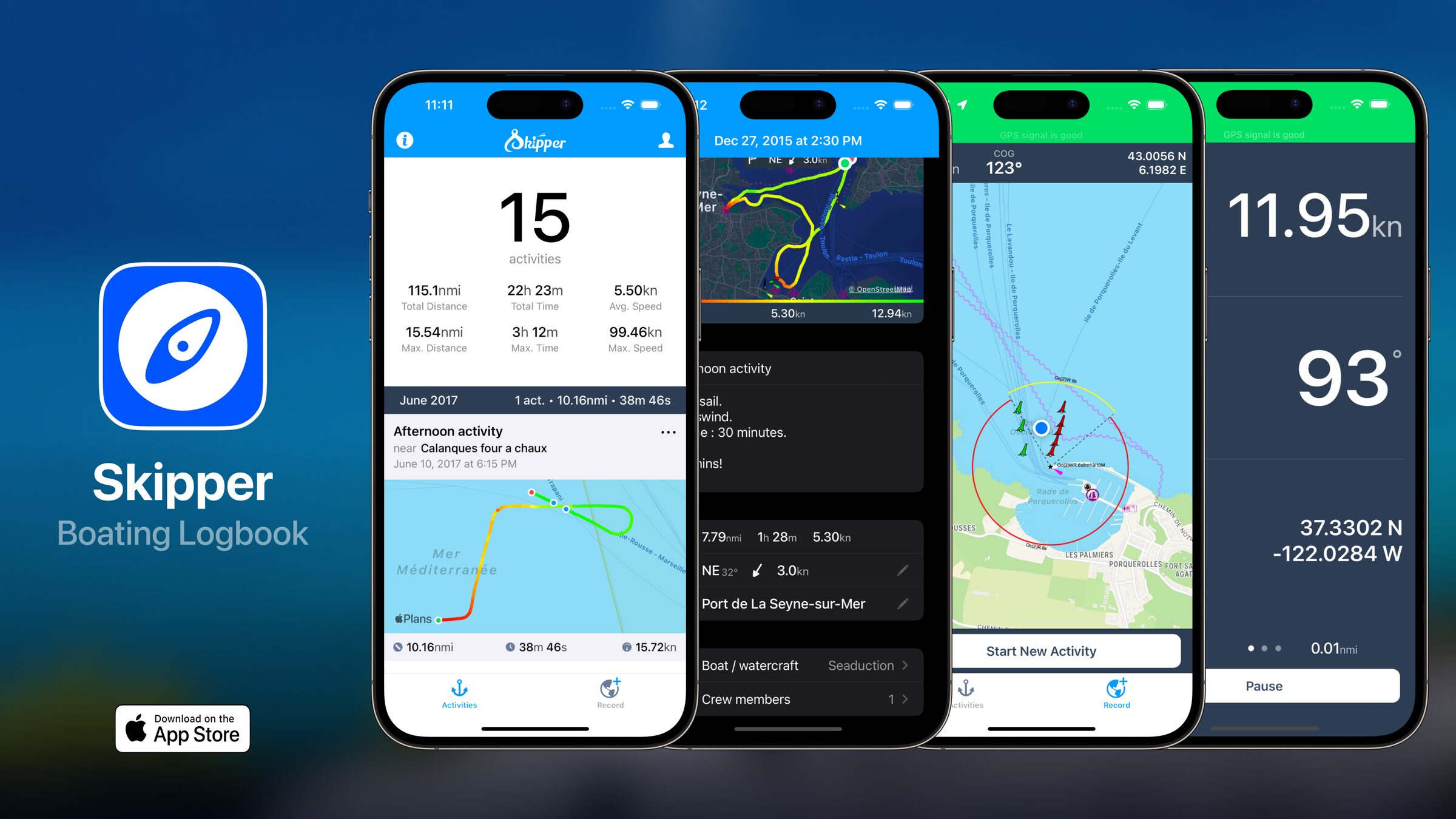
Skipper is still available on the store, and I've continued to maintain it. Despite being seasonally relevant (mostly used during summer), the app boasts hundreds of active monthly users recording their boat trips.
Three years ago, I transitioned to being an indie developer and focused solely on Skipper. I envisioned it becoming the "Slopes for boaters." For almost two years, I worked on a complete revamp. However, I stumbled due to a lack of focus and a clear plan. I attempted to include numerous features, experimented with different app architectures, redesigned UIs, switched to SwiftUI, incorporated CloudKit for device synchronization, and introduced a new subscription model—all at once. The overwhelming approach prompted me to pause the project, regroup, regain confidence, and refocus by working on another project, Tizipizi. This experience taught me the significance of prioritization and gradual releases.
Are there any indie makers or creators whose work you admire and follow closely?
- The “Dutch mafia” as I like to call them: Antoine van der Lee, Jordi Bruin, Hidde van der Ploeg
- Arnaud Joubay (No Meat Today)
- Emmanuel Crouvisier (CardPointers)
- Curtis Herbert (Slopes)
- Ryan Ashcraft (FoodNoms)
- Roddy Munro (Söka)
- Devin Davies (Crouton)
- David Smith
Could you recommend any specific tools or resources that you believe are helpful for other indie makers, especially those just starting out?
Here are some tools and resources that I've found helpful, especially for indie makers who are just starting out:
Tools:
- ✨ Fastlane: Recently, I rediscovered Fastlane. When paired with ChatGPT/DeepL, the "deliver" tool within Fastlane simplifies updating and localizing App Store metadata and screenshots. This makes App Store Optimization (ASO) management more convenient. By combining it with Git, you can even analyze the impact of changes across different versions.
- ✨ Apple Frames Shortcut: Another tool I recommend is the Apple Frames shortcut developed by Frederico Viticci. It lets you effortlessly add device frames to screenshots for various Apple platforms such as iPhone, iPad, Apple Watch, and Mac. This tool is especially efficient for batch processing of images. I used it to include iPhone-framed app screenshots in my Press Kit.
Resources:
- Jordan Morgan's blog is a valuable resource for Apple platform development: swiftjectivec. I highly recommend indie developers to read the "launching an indie app" post. Although it's four years old, the content remains highly relevant: On Launching Your Indie App.
- Curtis Herbert shares insights about building a business from a skiing and snowboarding app on the Slopes blog
- Ryan Ashcroft writes about what he learns building FoodNoms on his blog
- Roddy Munro shares his indie developer adventure on his blog
- David Smith provides a glimpse into his development journey on his website. Check out the Design Diary section for insightful notes!
Thanks for reading til the end. Hope you enjoy the interview as much as we did. Below are some useful links mentioned throughout the interview
Indie Interviews by Indie Goodies is all about discovering and showcasing indie makers. We firmly believe that behind every app, there's an inspiring tale of passion, creativity, and perseverance. We're always on the lookout for aspiring indie makers to feature in our series, and if you have any suggestions or recommendations, we'd love to hear from you.
Once again, thank you for joining us on this journey. Your support means the world to us. Until next time, keep supporting indie makers, keep exploring innovative apps, and subscribe to Indie Goodies interviews for more.